Manila and Cebu improved their rankings in advisory firm Tholons Inc.'s 2013 Top 100 Outsourcing Destinations.
Manila ranked third on the list following India's Bangalore and Mumbai which grabbed the top two spots. Manila ranked 4th in Tholons' 2012 and 2010 surveys, and has been ranked 8th in 2009 and 2008.
Cebu, meanwhile, improved its ranking to 8th this year from 9th in in 2012 and 2010. It has been previously tagged as an "emerging city" in Tholons' 2009 and 2008 surveys.
Five other Philippine cities have made it to the list: Davao at top 70, Santa Rosa (Laguna) at top 84, Iloilo City at top 93, Bacolod City at top 94 and Baguio City at top 99.
Baguio City was a new entry to the survey.
"The Philippines, Malaysia and Indonesia were amongst the most promising Southeast Asian destinations in 2012," Tholons noted.
"Among the three, the Philippines remains to have the most vibrant IT-BPO industry, led by the emerged outsourcing destinations in the country, Manila NCR, which claimed the third top outsourcing destination spot in this year’s list, and deposing India’s Delhi NCR (now 4th)," the firm continued.
Tholons stressed the growth in the country's IT-BPO industry was driven by fresh investments from both large and medium-sized foreign providers, and expansions of companies already in the Philippines.
"Today’s current global market leader for voice BPO, the Philippines has proven that there's still more to gain in the services globalization industry," Tholons said.
"Based on the events of 2012, the Philippines continued to garner interest from large, Western providers, not only as an offshore delivery location, but likewise as a potential rich domestic market for IT Services."
Business Processing Association of the Philippines (BPAP) president and chief executive officer Benedict Hernandez said he is confident the industry will continue its growth and reach its targets for this year until 2016.
"The year 2013 promises to be even greater as we expect revenues to increase to US$16 billion to provide employment to 926,000 Filipinos... We are steadfast in ensuring that the industry will achieve its targets of US$25 billion in revenues and 1.3 million full time employees by 2016," he said in a statement.
The Tholons survey revealed bulk or six of the top 10 cities were located in India: Bangalore (1), Mumbai (2), Delhi (4), Chennai (5), Hyderabad (6), and Pune (7).
Aside from Indian and Philippine cities, other destinations that made it to the top 10 were Dublin in Ireland (9) and Krakow in Poland (10).-ABS-CBN News (January 31, 2013 1:32PM)
Asia's tourism industry must prepare for major changes in the next 20 years, including a projected boom in travel by senior citizens and female business executives, a study said Tuesday.
The days when Asians toured in large groups are disappearing, according to the study commissioned by tourism technology provider Amadeus, resulting in the industry being fragmented into niche markets.
"Significant new traveler segments will emerge, such as the female business traveler, the small business traveler and the senior traveler, all of which have different aspirations and requirements from the travel experience," it said.
One of the fastest growing segments is travel among those over 65 as Asia's population ages.
More female business executives are also travelling as many Asian women rise on the corporate ladder, said the study which covered Australia, China, India, Indonesia, Japan, Singapore and South Korea.
China is expected to have the biggest rise in the number of outbound travellers aged over 65, with the figure projected to rise to 12.6 million by 2030 from only 1.7 million in 2011, it said.
Outbound senior travellers from India are projected to jump to 7.3 million from 1.3 million over the same period, with Indonesia forecast to register a fourfold growth in senior travel, the study said.
"The female business traveller is another rapidly growing opportunity," said the study, projecting that international business trips by women should grow 400 percent by 2030 from 2011 levels.
Providing women-only floors at hotels and understanding the way females make travel decisions are among the ways to win their business, it said.-GMA News (January 31, 2013 10:50AM)
Indonesia's anti-graft agency is investigating suspected corruption by the head of the country's largest Islamic-based party, which is part of the coalition government, his lawyer said Thursday.
The Corruption Eradication Commission took the chairman of the Prosperous Justice Party, Luthfi Hasan Ishaaq, in for questioning late Wednesday as he was attending a meeting, said Ishaaq's lawyer Zainudin Paru.
"He's still being questioned," Paru told AFP, saying that under the law the commission would have to wait until Friday to decide whether to formally detain Ishaaq.
The commission said Ishaaq was suspected of accepting bribes from meat importer PT Indoguna Utama to secure a government contract.
Its spokesman Johan Budi said investigators confiscated one billion rupiah ($102,000) in cash from a car belonging to his aide.
The anti-graft body concluded there was "sufficient evidence of corruption" against Ishaaq, he said.
"LHI is involved in this case. We suspect the one billion rupiah was for LHI," Budi said, referring to Ishaaq by his initials.
The Prosperous Justice Party has three ministers in President Susilo Bambang Yudhoyono's cabinet.
Yudhoyono's second presidential term, won on a fervent corruption-fighting platform, has been dogged by investigations into several members of his Democratic Party and coalition government.
Communication and Information Technology Minister Tifatul Sembiring of the Prosperous Justice Party said Thursday on Twitter that his party "respects the legal process" which is underway.
"We hope the process will take place in a just and honest manner based on prevailing laws and not influenced by political pressure," he tweeted.
The Prosperous Justice Party was founded after the 1998 fall of the Suharto dictatorship.
It has become the country's fourth-biggest party overall due partly to its clean and pious image in the mainly Muslim archipelago of around 240 million people.-Interaksyon (January 31, 2012 11:38PM)
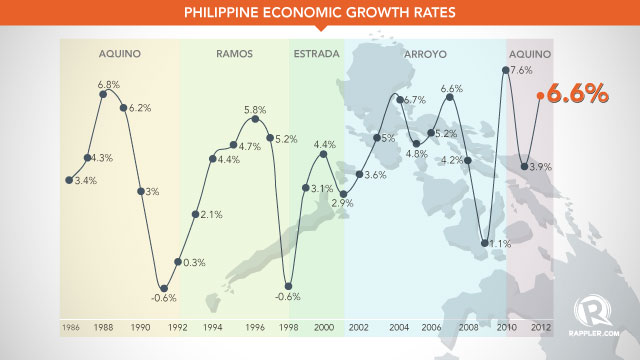
The Philippines grew 6.6% in 2012, exceeding forecasts and making it among Asia's best performing economies.
The economy's performance was well above the expansion of 3.9% in 2011 and surpassed the government's own target of 5% to 6% for 2012.
"In hindsight, it appears the target was low," noted Socioeconomic Planning Secretary Arsenio M. Balisacan at the press briefing on Thursday, January 31.
The economy grew 6.8% GDP in the 4th quarter, when consumer spending was up 6.9%, according to the National Statistical Coordination Board (NSCB). This is higher than Vietnam's 5.4% and Singapore's 1.1%, but not China's 7.8%.
NSCB Secretary general Jose Albert said the strong end to the year was fuelled by the services, business real estate and manufacturing sectors, reflecting broad-based growth.
The Philippine economy has been one of the strongest in Asia amid a general sense of optimism that can largely be attributed to President Benigno Aquino's drive to fight corruption.
Investor confidence has picked up, with share prices hitting 38 record highs in 2012.
Consumption, peso
"More than anything, we should really thank the private sector and the general public for trusting us and increasing their stake in the economy," Balisacan told reporters.
Household consumption remained the biggest growth driver of the economy, contributing the bulk, or 4.3 percentage points, to the annual performance. This was largely supported by remittances sent by millions of Filipinos working abroad (OFW) and complemented by low inflation.
Inflation averaged only 3.2% in 2012, within the relatively low target of 3% to 5% set by the Bangko Sentral ng Pilipinas (BSP) throughout the President's term.
The low inflation environment somehow made up for the 6% appreciation of the peso as OFW remittances and earnings of Business Process Outsourcing (BPO) firms ensured the steady inflow of dollars into the system.
"We continue to note that strong peso affects BPO, exports, families of overseas Filipinos," the Socioeconomic Planning chief said.
OFW remittances sent an average of $21.59 billion in the January to November period, up 6.1% year on year. BPOs, meanwhile, was expected to generate at least $220 billion in revenues globally in 2012 according to a report by the Everest Group.
Overall, services kept the economy afloat, accounting for 4.2% of the annual performance. The sector "defied expectations", Balisacan said. Buoyed by robust trade and communication servives, the sector grew 7.4% in 2012 and 6.9% in Q4.
Industry, on the other hand, contributed 2.1% to the full-year growth, while agriculture accounted only for 0.3%.
Public construction rebounded with a growth of 32.4% in 2012. Private construction posted a growth of 8.6%.
Global slowdown
Exports, one of the major legs of Philippine growth, was a laggard in 2012 due to the global economic slowdown and strong peso.
"The economy could have grown 7% to 8% in 2012, if not for the global economic slowdown," Balisacan noted.
The government targets 2013 growth to range between 6% and 7%.-Rappler (January 31, 2013 2:54PM)
By seeking China's participation before the tribunal, Manila has also changed the dynamics of its dispute with Beijing, which has persisted since 1995.
Speaking to The Straits Times on condition of anonymity, a legal expert said that Manila's submission might even compel China — which has largely been leery of settling territorial disputes in international fora — to change its mind.
Beijing would be wise to seek expert counsel before it decides whether to participate or even challenge the tribunal's jurisdiction, he said. “Beijing's initial reaction is likely that it would not participate. But if they seek expert advice, they will find it is a more complex decision than they first thought,” the expert said.
Even if China doesn't participate, a decision by the tribunal in Manila's favor would put it on higher legal and moral ground, says Professor Carl Thayer at the University of New South Wales.
Dr. Ian Storey, a senior fellow at the Institute of Southeast Asian Studies, said that China is facing a lose-lose situation.
“If it ignores the submission, then it will leave itself open to criticism that it does not adhere to international legal norms. If it decides to argue its case before the tribunal, it will have a very difficult task of justifying the legality of the nine-dash line and its claims to 'historic rights' within the limits of that line — and it might lose,” he said.
An ASEAN diplomat who requested not to be named agreed.
“If they don't fight the tribunal's jurisdiction, it might embolden other claimants in the South China Sea dispute. If they do fight and win, they could lose in the court of international opinion,” the diplomat said.
Analysts also noted that the Philippines has prepared its case well by recruiting top American lawyer Paul Reichler. He is a giantslayer in the realm of public international law, and became famous in 1984 when he won Nicaragua's case against the U.S. over its paramilitary activities in Central America.
In 2008, he also joined a legal team acting on behalf of Georgia, after Russia had invaded the country that year. He managed to secure a historic ruling from the International Court of Justice, which ordered both Russia and Georgia to halt ethnic cleansing in Russian-occupied Abkhazia and South Ossetia while Georgia's case against Russia was being heard.
As the legal expert put it: “He is a wise choice. He has done David versus Goliath before.”
China has 30 days to decide whether it would nominate an arbitrator to the tribunal. The Philippines has already nominated Judge Rudiger Wolfrum, a former president of the International Tribunal for the Law of the Sea, as a member of the tribunal.
Going forward, Manila's submission last Tuesday has significant knock-on effects on ASEAN.
ASEAN has been working with China on a legally binding Code of Conduct for the South China Sea. But Manila's latest move might affect ASEAN's centrality in the dispute. This will become even more pertinent as and when Vietnam — which is challenging China over the Paracels chain — decides to go the same arbitration route as Manila. It does look like the Philippines has scored a minor coup in its dispute with China.
Manila took many by surprise when it tabled its “well-written” submission last week, the ASEAN diplomat said. “To be honest, overall expectations of the Philippine diplomatic service are low. But what they did do is to listen to good legal advice. The submission was written by someone who really knew his job. They have stunned us by being so together on this case.”- The China Post (January 30, 2013)
The Philippines will buy 12 South Korean FA-50 fighter jets to strengthen its poorly-armed military, government spokesmen said Wednesday, January 30, amid increasing maritime tensions with China.
The FA-50s will be the first fighter jets to be operated by the Philippine air force since it retired the last of its US-designed F-5 fighters in 2005, said President Benigno Aquino's spokesman Edwin Lacierda.
"We don't have any existing jets right now that are in use, therefore it is necessary for us to upgrade. This is part of the ongoing process of modernising our military hardware," he told reporters.
Lacierda said the jets would be used for "training, interdiction and disaster response" and would use their aerial cameras to survey areas.
He stressed that the planned purchase was "not aimed at any particular country" despite the new tensions with China over conflicting maritime territorial claims in the South China Sea.
Defence department spokesman Peter Galvez said the FA-50 was chosen because it fitted all the country's requirements and because of its cost, adding that 18.9 billion pesos ($309 million) had been budgeted for their acquisition.
Manila will now begin negotiations for the aircraft, he said, adding that the government will seek to have two planes delivered as soon as possible so Filipino pilots can begin training on them.
In recent months the cash-strapped Philippines has stepped up efforts to modernise its military in the face of increasing Chinese assertiveness in pressing its claims to most of the South China Sea.
Although the Philippines has long relied on its defence ties with the United States for most of its arms, it has recently been seeking more weaponry from other countries like Poland, Spain, Italy, Canada and France.
President Aquino discussed acquiring more South Korean military equipment when South Korean President Lee Myung-Bak visited the country in November 2011.-Rappler (January 30, 2013 7:13PM)
The Philippines has increased the number of troops deployed on five islets, two sand bars and two reefs that it claims in the disputed Spratly islands to bolster its military presence in the contested South China Sea, a senior military intelligence official told Kyodo News on Tuesday.
The official, who spoke on condition of anonymity, said at least 126 soldiers were deployed in November last year, 2.5 times more than the previous deployment.
Lt. Gen. Juancho Sabban, the Philippine military's commander in the area, neither confirmed nor denied the recent deployment.
"We do not comment on military deployments," Sabban said in a text message to Kyodo News.
Since the 1970s, the Philippines has maintained a security presence, consisting mostly of soldiers, in the five occupied islets, two sand bars and two reefs.
In Thitu Island, known locally as Pag-Asa, the Philippines has also established a civilian community.
Thitu is the seat of government of Kalayaan -- a town of about 95 islands, cays, shoals and reefs that the Philippines claims in the disputed Spratly archipelago, which is claimed in whole or in part by China, the Philippines, Vietnam, Malaysia, Brunei and Taiwan.-ABS-CBN News (January 29, 2013 8:07PM)
To encourage investments and establish the Philippines as the center of coconut oil trade in Asia, the Department of Agriculture (DA) and the Philippine Coconut Authority (PCA) are mulling over the creation of a 150-hectare industrial estate.
The would contain “... all the support needed by the coconut industry, PCA administrator Euclides Forbes told reporters in a press conference Tuesday, saying this was part of his conversations with Agriculture Secretary Proceso Alcala.
"The goal is to have a center of coconut oil market in Asia... that will give our oil a good price," Forbes noted.
To be established in a coconut-producing province, like Quezon, the coconut industrial estate will provide ways of adding value to coconut-based commodities.
Deliberations on the industrial estate are being held by stakeholders, which the government intends to pursue under the Coconut Industry Development Roadmap, said Forbes.-GMA News (January 29, 2013 5:13PM)
A senior U.S. lawmaker meeting with Philippine officials said Tuesday that China should agree to face the Philippines before a U.N. arbitration tribunal to avoid a possible crisis over their long-raging territorial disputes in the South China Sea.
The Philippines took a daring legal step last week when it notified China that it will challenge Beijing’s claims to virtually the entire South China Sea in a case before an arbitration tribunal under the 1982 U.N. Convention on the Law of the Sea. China has not issued a formal response, but its ambassador to Manila, Ma Keqing, has reiterated Beijing’s “indisputable sovereignty” over the contested region.
Rep. Ed Royce, chairman of the House Foreign Affairs Committee, said Washington takes no sides in the territorial conflicts but backs an internationally accepted diplomatic solution.
“It is best that China joins the process so that we can move forward under international law,” the California Republican told The Associated Press after meeting Philippine Foreign Secretary Albert del Rosario and other diplomats in Manila.
“We want to calm the tensions,” Royce said. “We want this approached from the standpoint of diplomacy, and that is what we are conveying because in that way we don’t create crisis which roils the markets or creates uncertainty.”
Royce is leading a six-member U.S. congressional delegation in meetings with President Benigno Aquino III and other Philippine officials before traveling to Beijing on Wednesday as part of a tour of Asia, where America has been trying to reassert its presence after focusing on the wars in Afghanistan and Iraq.
China, the Philippines and four other countries have overlapping claims across the vast South China Sea. Beijing claims it has sovereignty over virtually all of the region, which may be rich in oil and gas and is home to some of the world’s busiest shipping sealanes.
Chinese paramilitary ships confronted Philippine vessels last year in a monthslong standoff over a disputed shoal. China has effectively controlled the shoal since June, when Manila withdrew its ships as a typhoon approached.
There are fears that territorial conflicts in the region, including a dispute between Japan and China in the East China Sea, could spark Asia’s next armed conflict.
Philippine Ambassador to Washington Jose Cuisia said del Rosario and other Philippine diplomats told the U.S. delegation that Manila decided to bring its disputes with China to international arbitration after other diplomatic steps failed, including an effort to get the 10-nation Association of Southeast Asian Nations involved in finding a solution.
In its case against China, the Philippines listed several aggressive moves it alleged were launched by China in recent years to fortify its territorial claims, including the occupation of South China Sea islands and the enactment this month of a Chinese law that allows Chinese patrol vessels to intercept, detain or expel foreign ships passing through vast stretches of waters that Beijing claims.
The Philippines specifically sought an end to Chinese occupation and activities on eight reefs and shoals and surrounding waters, including Mischief Reef, which China occupied in 1995, sparking fierce protests from Manila and concern from Southeast Asian nations.-Cebu Daily News (January 29, 2013 4:57PM)
The global research department of banking giant Standard Chartered on Monday said that the ASEAN region, which includes the Philippines, will likely grow anew this year, possibly outpacing global growth.
Edward Lee of StanChart said that the growth will be supported by strong domestic economic activity and support from intra-regional trade.
“ASEAN is set to be the region to be situated in again in 2013. After an estimated growth of 5.2 percent, we project the region to grow by 5.3 percent in 2013, outpacing IMF’s global growth estimate of 3.6 percent,” Lee said.
He stressed that the region is expected to see economies such as Indonesia, the Philippines, and Malaysia matching or exceeding their 10-year average rates.
The Philippines has been one of the better-performing economies in the region last year. It beat expectations in the third quarter with 7.1 percent GDP growth, ahead of other economies within the ASEAN. Indonesia was the second-best performer in the ASEAN with 6.2 percent growth, followed by Malaysia (5.2 percent), Vietnam (4.7 percent), Thailand (3 percent), and Singapore (0.3 percent).
Year-to-date growth is already at 6.5 percent with services and industry still driving growth.
The International Monetary Fund (IMF) last week revised upward it’s 2012 and 2013 economic growth forecasts for the country, as it expects private and public consumption to remain strong.
IMF said that it now sees the country growing 6.5 percent in 2012, higher than its forecast last year of 4.8 percent. For 2013, the IMF sees growth “slowing down” to 6 percent. But this is also higher than the lending institution’s earlier forecast of 4.8 percent.
Lee said that confidence in the ASEAN region is high, not just domestically but also among foreign investors, from whom the region attracted 7.6 percent of global foreign direct investment in 2011 versus 4.3 percent in 2006.
“Indeed, since 2000, following the crippling financial crisis, the ASEAN region has outgrown the world by an average of 1.5 percent,” Lee said.
Lee also stressed that despite beating global growth since the Asian financial crisis, the region still has plenty of room to expand as it catches up with the rest of the world.
“Despite the world-beating growth rates registered over the last decade or so, the region can still achieve more. The region is hardly at the stage where the factors for growth have become complicated,” Lee said.
StanChart said that at the most basic level, the continued process of urbanization will help to drive ‘easy’ growth.
“This is the economics of agglomeration. Urbanization helps to improve the overall well-being of an individual by improving access to services and housing. This can boost productivity and consumption,” Lee said.
Lee explained that the bank conducted a simple study on the positive impact of urbanization on economic growth.
“Urbanization and economic growth tend to go hand-in-hand, although there have been cases where urbanization is not accompanied by economic growth. Here, we assume that urbanization efforts are successful in raising economic well-being,” Lee said.
They categorized the 10 economies within the ASEAN bloc into three tiers of urbanization. Tier 3 (20-25 percent urbanized) includes Cambodia, Vietnam, Myanmar, Thailand and Laos; Tier 2 (50 percent) includes the Philippines and Indonesia; and Tier 1 (75 percent) includes Malaysia, Brunei and Singapore.
“Our study yielded two main results. First, Asean’s GDP per capita could almost triple to $10,290 from $3,509 in 2011, assuming successful urbanization. Second, assuming no GDP growth in the Tier 1 countries, the region’s GDP growth could average 6 percent for the eight years from 2012-19, higher than the 5.3 percent average from 2000-11,” Lee said.
StanChart stressed that urbanization is likely to grow at a slower pace than the overall economy, but per-capita GDP typically rises at an exponential rate as urbanization increases.
He added that urbanization helps to increase efficiency as distances are shortened. This lowers the costs of businesses, or the government’s costs to provide infrastructure and necessities. Jobs and supply of labor are concentrated rather than dispersed.
According to the World Bank, the world passed the 50 percent mark for urbanization in 2007. As of 2012, there are still 6 countries in ASEAN that have not passed the 50 percent point – Cambodia, Laos, Myanmar, Philippines, Thailand and Vietnam.
“Indonesia just crossed the midpoint at 51.4 percent. Singapore, Malaysia and Brunei are largely urbanized. As a region on the whole, we still have some low hurdles that we can cross to keep growth sustained,” Lee said adding that urbanization is typically associated with growing wealth.
Measuring this by GDP per capita and using the World’s experience with urbanization as an example, every percentage point increase in urbanization raises GDP per capita by about $500. The low hurdles to growth can also be seen in the GDP per capita of countries in ASEAN, Lee said.
Compared with the World’s GDP per capita of $10,000 in 2011, only 2 countries (Singapore and Brunei) exceed this level.
Malaysia is nearly on par but the next nearest country, Thailand, is only about half of the World’s GDP per capita.
Lee said Brunei and the Philippines are in the transition stage to efficiency-driven and Thailand and Indonesia are at the efficiency-driven stage.
The country’s per capita GDP is estimated at $2,500.-Malaya (January 29, 2013)
China has carried out a test flight of its biggest-ever army transport airplane, state media said Sunday, January 27, as the country strengthens its military capabilities.
A successful test flight of the Y-20, a long-range heavy transport jet, took place on Saturday, January 26, in the northwest of the country, the People's Daily newspaper reported on its website.
The plane was developed in China to transport military combat and support vehicles and can carry up to 66 tons, the report said, making it China's biggest home-grown military transport plane to date.
The Y-20 would be a "huge boost to the intercontinental strategic projection abilities of China's air force", the Beijing News cited an army expert as saying.
China has invested heavily in upgrading its military in recent years, rattling its neighbors in Asia. It insists its army spending is relatively low as a proportion of GDP and is not aimed at any other country.-Rappler (January 27, 2013 12:18PM)
Local chefs’ keen passion for the culinary arts will come to light at Food & Hotel Vietnam 2013 (FHV2013) for Vietnam Culinary Challenge 2013 this April.
The 2013 edition of the event, which will be staged alongside FHV2013, Vietnam’s foremost food and hospitality trade event from April 24 to 26, is setting up to bring a spectacular display of outstanding food preparation and artistic presentation.
The 5th edition of the event, organized by the Saigon Professional Chefs Guild, has been firmly entrenched in Vietnam as a prestigious and highly regarded competition for Vietnam’s culinary community since making debut in 2006.
The coming edition of the event is dedicated to raise the profile of Vietnamese culinary capabilities, as Vietnamese chefs taking part in this competition will have the opportunity for wide exposure to an international audience.
These chefs, groomed by a mix of well-established and up-and-coming F&B establishments spread across Vietnam, will compete against peers in a three-day series of cook-offs to be eligible for the coveted title of Grand Champion.
Comprising 13 classes, the competition will test chefs by pitching in the greatest extent of their culinary knowledge and expertise to produce an assorted range of unique, succulent and artistic culinary creations.
The judging panel will be headed by Chief Judge, Otto Weibel, a highly respected, Singapore-based WACS Approved Judge, who has accumulated a brilliant history of international judging and culinary experience.
He will be leading the panel comprising of internationally renowned industry luminaries, including Bui Thi Suong, Christian Pakura, Marco P. Brueschweiler, Rick Stephen, Vincent Tan and Yau Kok Kheong (K.K.Yau).
The Vietnam Culinary Challenge is designed with several key objectives in mind.
The first is to raise Vietnam’s culinary standards by presenting an opportunity for industry professionals to gain valuable experience through a competitive setting.
Moreover, its aim is to encourage and facilitate the exchange of culinary expertise, knowledge and ideas with peers within the culinary community, and generate greater recognition and promote awareness of Vietnam’s culinary capabilities to the regional food and hospitality industry.-Tuoitrenews (January 27, 2013 5:00PM)
Boracay, a favorite island destination in the country, has a new distinction.
Travel+Leisure ranked Boracay as the 5th most romantic island destinations in the magazine's February issue.
"Once a backpacking haven with only the most basic accommodations, this 5-mile-long island now rivals better-known Asian destinations such as Phuket and Koh Samui, Thailand. A 45-minute flight from Manila brings you to either Kalibo or Caticlan, where boats connect directly to White Beach, whose powdery sand may just be the softest in the world," T+L wrote.
It also cited Mandala Spa & Villas and the resort's yoga classes, the cliffside pool villa, and massage services, especially Filipino's traditional "hilot."
Below is the magazine's complete of its 'getaway escape' list
- Bora-Bora, French Polynesia
- Capri, Italy
- Santorini, Greece
- Kauai, Hawaii
- Boracay, Philippines
- Maldives
- Maui
- Moorea,Tahiti
- Vieques, Puerto Rico
- Bali
- Grenadines, St. Vincent & the Grenadines
- Lanai, Hawaii
- Anguilla
- Huahine, French Polynesia
- Fiji
- Virgin Gorda, British Virgin Islands
- Great Barrier Reef, Australia
- St. Bart’s, French West Indies
- The Big Island, Hawaii
- St. John, American Virgin Islands
- Harbour Island, Bahamas
- Vancouver Island, British Columbia
- Mallorca, Balearic Islands, Spain
- Nevis
- Mykonos, Cyclades, Greece
- Nantucket
- St. Lucia
- Bermuda
- Sicily
- Oahu
- Kiawah Island, SC
- Saba
- Florida Keys
- Turks and Caicos
- Jost Van Dyke, British Virgin Islands
- Rappler (January 27, 2013 3:19PM)
The Philippines on Saturday welcomed Thailand’s proposal to find a common position among the Association Southeast Asian Nation over the dispute in South China Sea (West Philippine Sea).
Thailand’s plan cropped up even as the Philippines has already filed its case against China for its “excessive” claims on the contested waters.
Philippines’ Foreign Affairs Undersecretary Raul Hernandez said that “any initiative that would support the effort to find peaceful and durable solutions in the disputed seas is welcome”.
In Singapore, Thai Foreign Ministry permanent secretary Sihasak Phuangketkaew announced plans to hold separate talks with each of the countries that lay claim to the disputed areas, as attempts to resolve the conflicts failed in the past Asean summits.
Thailand acts as coordinator for Asean-China relations, with its role good from 2012 to 2015.
“Each country’s position on the matter differs, with domestic politics and nationalism major factors in determining how Asean countries have so far approached the topic,” Sihasak said.
He admitted that it is not an easy task to seek a common Asean position because it is critical to the various nations’ energy security.
The Philippines, as the founder of the regional bloc, assured that it would continue to work with the Asean but it would coordinate with them on the basis of international law.
“The Philippines will continue to work with Asean in advancing rules-based solution to the issue in accordance with international law including the Unclos (United Nation Convention on Law of the Sea),” Hernandez said.
Sihasik however admitted that it does not know whether negotiations with China would prosper since it would only depend on Beijing’s willingness to engage in talks.
He said he hoped the change in China’s leadership in March will lead to a more “relaxed stance on the matter in Beijing”.
“Asean and China should look at the big picture and Beijing should not regard a common Asean position as an attempt to pressure the new leadership. Instead, a common position will reinforce a centralised Asean approach to regional security, something China will benefit from,” he said.-Manila Standard Today (January 27, 2013 12:01AM)
Indonesia may hold the key to a $1 trillion injection into the global economy.
That's how much the World Trade Organization believes is riding on talks later this year in Bali, when trade ministers hope to cut through some of the red tape that slows global commerce.
Indonesia's Foreign Minister Marty Natalegawa told The Associated Press that failure is not an option and that a strong effort is being put in to ensure that the WTO meeting in Bali is "crowned with success."
The current trade talks, known as the Doha Round, began in 2001, and after a decade of little progress for a range of reasons, many had pronounced the negotiations to reduce global trade barriers as dead.
There are hopes that the current fragile state of the world economy, including the debt crisis afflicting the 17 European Union countries that use the euro and unspectacular US growth, may add impetus to the discussions.
"It's very critical now, especially with the difficulties in the global economy, especially in the eurozone," he said of efforts to reach a new global free trade pact. "Trade facilitation becomes a key driver for economic recovery, so this is now even ever more important to what it was before."
Trade ministers from 24 nations met yesterday on the sidelines of the World Economic Forum in Davos in an unofficial gathering hosted by the Swiss government.
Afterward, Swiss Economic Minister Johann Schneider-Ammann said the group agreed they could reach a tentative agreement on some of the key elements of a global trade deal this summer, in preparation for the ministerial talks in December at Bali.
Schneider-Ammann said he sensed some "optimism" that efforts to streamline customs procedures and other rules to reduce the costs of trade "will be successful."
The ministers agreed to resist protectionism, focus on elements such as trade facilitation and agriculture, and to "take stock" around Easter of the progress being made, Schneider-Ammann said.
"Serious attempts to deliver results in Bali have already started," he added.
The Doha negotiations have been billed as a way of boosting economic development among the poorest countries, by reducing barriers on their exports to wealthier markets.
The WTO's director general, Pascal Lamy, has been telling the Davos gathering of political, business and academic elites that an international trade deal would provide a $1 trillion boost to the global economy. He estimates world trade is worth about $22 trillion.
Flanked by Schneider-Ammann, Lamy told reporters that he believes it is technically "do-able" to craft draft agreements on some of the key elements of a deal by next summer.
US Trade Representative Ron Kirk said he had to "temper" his enthusiasm for a deal since it has eluded the world for a decade.
Areas of dispute include tariffs on manufactured good, agricultural subsidies, market access and intellectual property rules. Brazil, China and India have resisted US demands to lower taxes on imports of manufactured goods.
"But, at least of the 24 countries represented today, it felt like we had made more substantive progress," Kirk said in an AP interview. "The good news is we've spent a lot of work on a smaller, more realistic package centered around trade facilitation, which can be a huge benefit to developing economies. And it feels like that is starting to bear fruit."
Kirk, who leaves his job next month, said the ministers renewed their commitment "to double down, do what we need to do" to reach a deal in Bali. "I'm as hopeful as I've been in a long time."-The Philippine Star (January 27, 2013 5:01AM)
President Benigno Aquino III said he has accepted an offer for the Philippines to host the East Asia Summit for the World Economic Forum next year.
Aquino made the announcement during a meeting with reporters at the Europe Hotel here after attending this year's WEF Annual Meeting.
"We agreed to host the East Asia Summit for the WEF in 2014," he said.
Aquino said hosting the 2014 East Asia Summit would benefit the country.
"It puts us at the center stage of the world map for that period, which is something like July or so. The details will have to be worked out, it was offered to us and I accepted to hosting the event," he said.
Aquino also said around 35 multinational companies, among them Mitsubishi and Unilever, will be coming to the Philippines “to investigate possibilities” for investments.
He said his meetings with other world leaders and with CEOs of multinational firms had been “very successful.”
“We were able to touch base with the so many other leaders of the country, of various countries … I think there’s a universal consensus both by the participants and by the Cabinet members present, our business sector, that it was a very successful meeting,” he said.
Industry Secretary Gregory Domingo said among the firms that have signified their intention to send teams to the country are “very big hedge funds” from the United States, although he declined to identify which companies these were, saying: “Obviously, some of them don’t want to be mentioned, so we cannot really mention (the companies) by name.”
“These are truly exciting times for our country. We are realizing the long-untapped potential of our country, and we are here to invite you to join us,” Aquino said, as he identified the three priority investment sectors in the country as tourism, agriculture, and infrastructure.-Interaksyon (January 26, 2013 6:35PM)
UN leader Ban Ki-moon on Tuesday called for an "amicable" settlement to a mounting South China Sea territorial dispute between China and other Asian nations.
Asked about the Philippines' decision to refer the case to a UN tribunal, Ban told reporters he has been following the dispute "carefully".
"It is important for those countries in the region to resolve all these issues through dialogue in a peaceful and amicable way," he said.
The United Nations is ready "to provide technical and professional assistance, but primarily all these issues should be resolved by the parties concerned," the UN leader added, carefully avoiding backing any country involved.
China, the Philippines, Brunei, Malaysia, Vietnam and Taiwan all have overlapping claims to the territory.
The Philippine government announced Tuesday that it would ask an arbitration panel under the UN Convention on the Law of the Sea - a 1982 treaty signed by both countries - to rule on China's claims.
Philippine Foreign Secretary Albert del Rosario said, "The Philippines has exhausted almost all political and diplomatic avenues for a peaceful negotiated settlement of its maritime dispute with China."
Over the past two years the Philippines and Vietnam have complained at China's increasing assertiveness in enforcing its claims, particularly in areas believed rich in oil and natural gas reserves.
China has said the rival claims should be settled through negotiations.-Interaksyon (January 23, 2013 4:05AM)
Singapore on Monday, January 21, announced increased cash bonuses for parents of newborn babies and introduced paternity leave as part of a package of measures to boost population and reduce dependence on foreigners.
Parents of Singaporean babies born since August 26 last year will receive a cash gift of Sg$6,000 ($4,900) -- a rise of 50 percent, which applies to each of a couple's first two children.
The financial incentive will rise to Sg$8,000 for a couple's third and fourth babies, as the government attempts to offset the high cost of raising a family -- one of the gripes often aired by young couples in the city-state.
At least one parent must be a Singapore citizen to be eligible for the handout.
The government will subsidise one week of paternity leave for fathers of babies born from May 1 this year, the National Population and Talent Division (NPTD) agency also announced in a press release.
In addition, new fathers will be eligible to stay off work for a second week by taking a chunk of the standard 16-week maternity leave granted to their wives, it added.
Housing issues were also addressed in the Sg$2 billion ($1.63 billion) Marriage and Parenthood Package.
Couples with at least one child below 16 will be given priority to buy government-built apartments, where most Singaporeans live. Many couples keep their families small until they get their own flats.
"We hope that the enhanced marriage and parenthood measures will help create a more conducive environment for Singaporeans to set up families," Deputy Prime Minister Teo Chee Hean said in the press release.
Singapore's birth rate of 1.20 children per woman, according to 2011 figures, is well below the 2.1 figure needed to sustain the native population.
The low rate has forced the city-state to bring in more immigrants in recent years. But the numbers were reduced following a social backlash, with foreigners blamed for problems including overcrowding, straining public services and driving up housing costs.
Singapore, which relies on foreign labour to power its economic growth, now has a population of 5.3 million, of whom only 3.3 million are citizens.
By 2030, 20 percent of Singaporeans are forecast to be 65 years or older, according to official statistics. - Rappler (January 22, 2013)
The Philippines raised the stakes in its maritime territorial dispute with China by announcing Tuesday it is taking the case to an international tribunal.
The two Asian nations have been at loggerheads over China's claims of sovereignty over large swathes of the South China Sea, one of several tense disagreements between Beijing and its neighbors over waters in the region.
"The Philippines has exhausted almost all political and diplomatic avenues for a peaceful negotiated settlement of its maritime dispute with China," Philippine Foreign Minister Albert del Rosario said Tuesday.
As a result, Manila is challenging China's claims, which include the waters off the west coast of the Philippines, at an international arbitration tribunal, citing the United Nations Convention on the Law of the Sea.
Read more: Asean Chief: South China Sea risks becoming 'Asia's Palestine'
The state-run Chinese news agency reported the announcement by the Philippines on Tuesday but didn't carry an immediate response from Beijing.
Other countries, like Vietnam and Malaysia, also lay claim to parts of the South China Sea, a 1.3 million square-mile patch of the Pacific Ocean dotted with hundreds of largely uninhabited islands and coral atolls.
The area is a fertile fishing ground and is believed to hold large oil and gas reserves under its seabed.
Tensions between China and the Philippines soared last year during a naval standoff over a remote rocky outcrop in a disputed part of the sea. That crisis lasted months and stoked fears of an open conflict before the Philippines withdrew its ships, citing stormy weather.
Analysts say China is trying to solidify its claims of "indisputable sovereignty" over most of the South China Sea by conducting regular maritime patrols in the area.
It is using a similar approach in its heated dispute with Japan over set of small islands in the East China Sea.
The United States is treading a delicate path amid the various territorial tensions in the region.
On Sunday, Chinese Foreign Ministry Spokesman Qin Gang warned United States to "be careful with its words" after Secretary of State Hillary Clinton said Washington opposes "any unilateral actions that would seek to undermine Japanese administration" of the disputed islands in the East China Sea.
Clinton had reiterated the U.S. policy that it doesn't take a position on the ultimate sovereignty of the islands.
As recently as last week, Xinhua reported that Chinese surveillance vessels were carrying out regular missions in the South China Sea.
The Xinhua report cited Liu Cigui, director of the State Oceanic Administration, as saying that China would continue the patrols "to secure the nation's maritime rights and interests" in areas it claims as its territorial waters.-Cable News Network (January 23, 2013)
The Iranian government has confirmed reports that it is preparing to open an embassy here, with a spokesman saying initial preparations have already been made.
The spokesman told news agencies that Iran had initiated discussions on opening the embassy.
Myanmar has diplomatic relations with 110 of the 193 member countries of the United Nations. The United States restored full diplomatic relations with Myanmar last year following democratic reforms. Twenty-eight countries now have embassies here, with embassy staff saying that some are quickly expanding their commercial affairs departments to handle a surge in interest in business opportunities.-Asia News Network (January 22, 2013)
The constant evolution and innovation in the world of TV technology have been successfully fueling consumer demand and driving consistent growth in the industry over the last few years. In the Southeast Asia region, flat panel TVs have continued to register a surge in demand in 2012, selling over 8.3 million units in the first eleven months of the year and reflecting a 26 per cent volume growth over the same period the previous year.
LCD is the most sought after TV type across the region, making up more than nine out of ten sets purchased by Southeast Asian consumers. Four of the six markets tracked by GfK - Malaysia, Vietnam, Thailand and Indonesia registered 10 to 70 per cent spike in sales quantity of LCD TV in the respective countries.
"The total LCD TV market across the region increased by 13 per cent over last year, spurred largely by the strong demand of LED TVs which contributed to a significant chunk of the LCD TV pie," said Gerard Tan, Account Director for Digital Technology, GfK Asia. "The developing countries are getting more exposed to the advantages of this newer TV technology and its consumers are increasingly demanding for it."
Indonesia is the largest and also fastest growing market, thanks to the population's ongoing high rate of conversion from the traditional CRT TV. Nearly 2.9 million sets of LCD TVs were sold in January to November 2012; 68 per cent more than a year ago. While in the Singapore market on the other hand, 77 per cent of all flat panel TVs sold were LED TVs with the rest being Plasma TVs.
"Consumers in the region are willing to splurge on TVs, having spent over USD 3 billion on LCD TVs last year-13 per cent more compared to the year before," highlighted Tan. "One of the key drivers of the strong sales is greater affordability due to price erosion attributed to keen competition among major brands, and the introduction of more advanced technologies, for instance, Internet-content, 3D etc."
According to findings, Internet-content and 3D TVs are progressively gaining grounds with all the six markets reflecting sales growth. While one in every ten (11%) sets of TV sold in the region last year had the Internet content feature, 3D TVs formed around 7 per cent of all flat screen TV sales.
"The latest cutting edge TV technologies introduced by major brands are the 4K and OLED TVs which received much attention during the recent Consumer Electronics Show," highlighted Tan. "However, with the current economic outlook in the region, consumers are likely to be exercising more caution in spending on big ticket items such as these upmarket TVs. Nevertheless, we foresee the overall TV market to continue remaining buoyant in 2013, attributable to the continued switchover process in the developing markets," he concluded.-Asia One (January 22, 2013)
A 5.9-magnitude earthquake struck off Indonesia's Aceh province on Tuesday, killing an eight-year-old girl and injuring seven others, officials said.
The quake struck 112 kilometers southeast of the provincial capital of Banda Aceh at 22:22 GMT, at a depth of 37 kilometers, the US Geological Survey said.
"An eight-year-old girl in Pidie district was killed after a cupboard in her bedroom fell on her when the quake shook the ground," the district's disaster management agency chief Apriyadi, who goes by one name, told AFP.
He added that seven people were injured, four of them seriously, due to collapsing walls.
The Indonesian Meteorology, Geophysics and Climatology Agency (BMKG) issued no tsunami alert.
Indonesia sits on the Pacific "Ring of Fire" where continental plates collide, causing frequent seismic and volcanic activity.-The Jakarta Globe (January 22, 2013)
Amid rising tensions with Japan over disputed islands, Chinese army in a bid to scale up battle readiness has ordered its armed helicopters to shift focus from logistic missions and gear up for combat operations.
The People's Liberation Army (PLA) planned to change the training strategy of its army aviation unit as more and more armed helicopters joined the service, PLA Daily which is the official newspaper of the military quoted an army aviation unit as saying.
The focus of army aviation unit will be shifted from logistics missions to combat ones, from building the capacity for non-war military actions to core military actions, state-run Xinhua news agency quoted the daily as saying.
The unit will work on major missions such as long-distance tasks, large scale offshore operations, attack coordination with other units and large scale airborne operations, it said, adding that the unit will also aim to improve its operation capability based on IT technologies.
Both China and Japan have scaled up military operations after the escalation of the dispute over the islands called Diaoyu by China and Senkakus by Japan.
The PLA move comes in the backdrop of recent military drills conducted by the Japanese army helicopters to defend the islands from enemy raids.
Chinese military exercises in recent months involving ships and aircraft focused on taking the islands and retaining them.
While naval ships of both the countries patrolled the waters of the islands, the two also scrambled aircraft last week to intercept surveillance planes.
Conflict over the islands escalated after Japan, which retained the administrative control over the islands bought them from a private party.
Objecting the move, China sent its ships into the island waters. On January 15, General Staff Headquarters of the PLA had asked commanders and soldiers to strengthen their readiness for possible war with a directive to stage more exercises.
“The General Staff Headquarters of PLA has pledged to stage more military drills that simulate real combat, urging commanders and soldiers to strengthen their readiness for possible war,” the PLA Daily reported.-Deccan Herald (January 21, 2013)
The Zest-O group is eyeing to expand its manufacturing footprint across Asia, enabling the beverage firm to tap the huge population of booming economies in the region.
Former ambassador Alfredo Yao, Zest-O chairman, said the company is in talks to build manufacturing plants in China and Myanmar, with the benchmark investment for each facility expected to reach P250 million.
"We may spend more in Myanmar because we are thinking of [putting up] a bottling company there. We are following what we did here with RC Cola," Yao said.
Myanmar is on the brink of economic resurgence as it opens up to foreign investment and trade following decades of military rule. Zest-O is among those seeking a piece of what can be a very lucrative market.
"Galing ‘yan [Myanmar] sa embargo. Like you're pouring water in the dessert area," said Yao.
Zest-O has production plants in the Middle East and Indonesia, with operations abroad accounting for less than a tenth of the company's total business. It exports products to China, Indonesia, Vietnam, the Middle East, and the United States.
As exports become more expensive, Zest-O will focus on expanding its manufacturing presence overseas, said Yao, adding that the company employed a strategy of initially testing offshore markets through exports before expanding its operations there.
“This year, we will be doing good overseas. Our China operations will be okay. We’re just starting but it will have a snowball effect,” said Yao.
Aside from flagship Zest-O, the company markets Sunglo and Big 250 juice drinks as well as carbonated drinks and fruit sodas under the RC Cola, Zest-O-Cola, Rootbeer, and Twist brands. The company also offers health drinks under the One brand.
"It's the same product. We have to change a little of the packaging. We have to change the flavor and make some adjustments," said Yao, adding that Zest-O’s domestic business continues to grow and is seen to expand by double digits this year.
Established in 1981 as Semexco Markting Corp, Zest-O pioneered the first ready-to-drink juice in flexible foil pouch. The company operates five manufacturing plants in the Philippines and employs approximately 100 personnel for each facility.-Interaksyon (January 21, 2013 5:21PM)
Representatives of the ten ASEAN nations met on Sunday in Laos, capital of Vientiane, to launch the ASEAN Tourism Forum (ATF), where they pledged to expand tourism cooperation and discussed creating a pan-ASEAN tourist visa.
The ATF, which was first held in 1981, is designed to facilitate and develop tourism promotion and cooperation across the region. A total of 150 tourism ministers and officials from Brunei, Cambodia, Indonesia, Lao PDR, Malaysia, Myanmar, the Philippines, Singapore, Thailand and Vietnam attended the meeting.
Joining them will be 1,450 delegates, including 800 ASEAN exhibitors, 400 international buyers, 150 international and local media as well as 100 tourism trade visitors. Delegates will engage in bilateral talks, sellers and buyers meetings, and receive presentations from various ASEAN nations on their tourism industries.
According to a press release from the ATF, ASEAN leaders will consider the possibility of creating a single pan-ASEAN visa for some member countries to encourage tourists to visit. Leaders have already agreed to put more funding into developing tourism, source more financing from dialogue partners, and to promote tourism in the region.
"As an important economic sector, ASEAN cooperation in tourism has gone from strength to strength," said Lao Minister of Information, Culture, and Tourism Dr Bosengkham Vongdara. Vongdara cited the increase in total international visitors arriving in the region from 73.7 million people in 2010 to 81.2 million in 2011 as evidence of this cooperation.
Tourism is of particular significance to Laos, one of the least developed countries in South East Asia with few domestic industries. With a population of only 6.3 million people, Laos received approximately half this figure in tourist arrivals in 2012. This contributed significantly to economic growth and development in the country. Arrivals are expected to reach five million by 2015.
Across the various ASEAN member nations, tourism has risen between eight and 29 percent from 2010 2011. The ATF will run from Jan. 18 24.-Philippines News Agency (January 21, 2013)
Three Chinese government ships were in waters around islands at the center of a dispute with Tokyo on Monday, the day after China issued a rebuke to the US over comments seen as supporting Japan.
Japan’s coastguard said the maritime surveillance boats were in waters around a chain of Tokyo-controlled islands known as the Senkakus in Japan, which Beijing calls the Diaoyus.
China has repeatedly sent ships to the area since Japan nationalized some of the chain in September, a move that triggered a diplomatic dispute and huge anti-Japan demonstrations across China.
Beijing has also sent air patrols to the archipelago in the East China Sea, and in recent weeks both Beijing and Tokyo have scrambled fighter jets, though there have been no clashes.
On Sunday, Beijing said it was “strong dissatisfied” after US Secretary of State Hillary Clinton issued a veiled warning to China not to challenge Tokyo’s control over the chain, which is believed to sit atop vast mineral reserves.
On Friday, Clinton said the US opposed “any unilateral actions that would seek to undermine Japanese administration” of the islands.
The top US diplomat added “we do not want to see any action taken by anyone that could raise tensions or result in miscalculation that would undermine the peace, security and economic growth in this region”.-Philippine Daily Inquirer (January 21, 2013 10:13AM)
The Philippines is the “most romantic destination” for Chinese paper Shanghai Morning Post, the Department of Foreign Affairs (DFA) announced Monday.
The DFA said that the "Most Romantic Destination" award was given to the Philippines through the DFA's representative last January 15 at the Shanghai Peninsula Hotel.
The award was based on a consumer survey by the Shanghai Morning Post.
Philippine Consul General Charles Jose received the award from Liu Sha, the Chinese paper's Editor-in-Chief.
The DFA said that the other country-winners were: Australia as “The Best Tour Destination for Discovery;” Switzerland as “The Best Shopping Paradise;” Korea as “The Best Skiing Destination;” and Germany as “The Best Destination for Art Appreciation.”
The Philippines has also been awarded "Best Tourist Destination" by another Chinese newspaper, the Oriental Morning Post, last January 9.
The DFA said that it is expecting more Chinese to fly to the Philippines for the upcoming week-long Chinese New Year holiday in February, which is also Valentine's Day month.
It said that several Philippine carriers have re-launched flight services from China to the Philippines because of the increasing demand of Chinese travelers for short-haul beach holidays.-The Philippine Star (January 21, 2013 11:37AM)




.jpg)


