Malaysia surpassed Indonesia as the key player in the upstream hydrocarbon industry in Southeast Asia last year, as Indonesia struggles to encourage new investments in the sector amid the nation’s dwindling oil production.
Research by the Wood Mackenzie Group showed Indonesia, the former sole Southeast Asia member of the Organization of the Petroleum Exporting Countries (OPEC), only contributed 14 percent to the region’s newly discovered oil and gas reserves in 2012.
The Edinburgh-based global energy oil and gas research specialist said that last year, Indonesia discovered 13 million barrels of oil equivalent (boe) of new reserves in 20 new oil and gas fields.
Malaysia, on the other hand, was the “stand-out performer” in Southeast Asia’s upstream sector with estimated discoveries of 1.4 billion boe last year, or 72 percent of the total discoveries in the region.
At least six new gas fields with combined estimated reserves of 7.3 trillion cubic feet (tcf) discovered in Malaysia were included in the top-10 largest discoveries in Southeast Asia, according to the report.
Malaysia’s state-owned energy company, Petronas Carigali, Swedish oil and gas firm Lundin Petroleum and US-based Murphy Oil were among the most successful players in Malaysia. Murphy, which lost US$214.6 million after discovering dry holes during its four-year explorations off the coast of Papua, Indonesia, was successful off the coast of Sabah, Malaysia, with its three fields holding a combined total of 600 billion cubic feet (bcf) of gas reserves.
“The year 2012 was a disappointing year for Indonesia,” Wood Mackenzie said in its report, a copy of which was obtained by The Jakarta Post.
Norwegian Statoil’s two oil and gas fields in the Karama block in the Makassar Strait, Sulawesi, as well as several basins drilled by the Netherlands-owned Pexco in North Sumatra and Italy’s ENI off East Kalimantan were described as “disappointments” by the research group.
Malaysia, which according to Wood Mackenzie had introduced several fiscal initiatives to encourage exploration and development, awarded 13 production sharing contracts (PSCs) in 2012, a record number for any one year.
Overall, the lack of upstream activity in Indonesia, which awarded 20 contracts last year, down from 52 awarded in 2011, as well as in Myanmar, which awarded three licenses, down from 12 in 2011, contributed to a dreary year in terms of licensing activity in Southeast Asia.
With 47 licenses awarded across the region last year, licensing activity was down by 36 percent compared with 2011.
All in all, exploration activity in Southeast Asia fell last year with 190 wells completed, a slight decline from the average of 200 wells completed per year in the past few years, with Thailand and Vietnam experiencing the largest exploration decreases.
Indonesia’s unfavorable policies toward oil and gas firms have been blamed for the steady decline in oil output from 1.3 million barrels per day (bpd) in the early 2000s to the current figure of around 830,000 bpd as the country merely relies on aging fields.-The Jakarta Post (February 19, 2013 9:04AM)
A committee is now evaluating the best and most affordable missile which will be hopefully installed on the country's two Hamilton-class cutters now in service at the Philippine Navy (PN).
The Department of National Defense (DND) observer said that missiles being evaluated are the anti-ship type which will give the BRP Gregorio Del Pilar (PF-15) and BRP Ramon Alcaraz (PF-16) more capability in protecting the country's maritime domain.
Having the anti-missiles will also give the two ships more firepower in engaging would-be poachers and intruders.
The DND official declined to identify the exact type of missile being studied and stressed that the matter is "top secret".
Some defense officials earlier said that the Harpoon is the ideal missile system for the PN's Hamilton-class cutters as the weapon was already deployed aboard the USCGC Mellon, the sister ship of the BRP Gregorio Del Pilar and BRP Ramon Alcaraz, in January 1990.
The USCGC Mellon also received an anti-submarine warfare (ASW) suite, including the AN/SQS-26 sonar and Mark 46 torpedoes.
The ASW suite and Harpoon capability were removed due to fiscal constraints in the latter part of the 1990s, but served as a proof of capability for all USCG cutters.
The Harpoon is an all-weather, over-the-horizon, anti-ship missile system, developed and manufactured by McDonnell Douglas (now Boeing Defense, Space & Security).
In 2004, Boeing delivered the 7,000th Harpoon unit since the weapon's introduction in 1977. The missile system has also been further developed into a land-strike weapon, the standoff land attack missile.
The regular Harpoon uses active radar homing, and a low-level, sea-skimming cruise trajectory to improve survivability and lethality. The missile's launch platforms include:
* Fixed-wing aircraft (the AGM-84, without the solid-fuel rocket booster).
* Surface ships (the RGM-84, fitted with a solid-fuel rocket booster that detaches when expended, to allow the missile's main turbojet to maintain flight).
* Submarines (the UGM-84, fitted with a solid-fuel rocket booster and encapsulated in a container to enable submerged launch through a torpedo tube).
* Coastal defense batteries, from which it would be fired with a solid-fuel rocket booster.-Philippines News Agency (February 18, 2013)
The Philippines and Indonesia, two of the strongest economies in Asia-Pacific, are also home to the most optimistic consumers in the region, according to a survey by MasterCard.
The latest MasterCard Worldwide IndexTM of Consumer Confidence showed that despite uncertainty in the global economy, consumers in Asia-Pacific are still optimistic.
The Asia-Pacific region saw a slight increase to 59.7 index points from 57.2 in the second half of 2012, with 9 out of 10 countries recording positive sentiment.
"The Asia/Pacific region is increasingly divided between markets that are still closely linked with the global trade cycle, and those that have been able to delink themselves from it. This trend is reflected in the latest MasterCard consumer confidence survey," Dr. Yuwa Hedrick-Wong, global economic advisor for MasterCard Worldwide, said in a statement.
The index showed "extreme improvements" in Indonesia, where consumer confidence jumped 30.1 points from 57.4 to 87.5, and the Philippines, which rose 13.6 points from 65.2 to 78.8.
The Philippines and Indonesia are considered
"bright spots" in the global economy, with their fast-growing economies boosting consumer confidence.
"The strong improvement in consumer sentiment in Indonesia and Philippines are cases in point. The results of the consumer confidence survey provide additional evidence that it is critically important to be able to leverage domestic demand effectively to support economic growth in the context of weakened global demand," Hedrick-Wong said.
On the other hand, the biggest drop in consumer confidence was in South Korea, which fell to negative 38.6 index points from positive 51.3 index points.
The survey was conducted between November 7 to December 23 on 11,339 respondents in 25 countries.-ABS-CBN News (February 18, 2013 11:47AM)
Thailand’s fourth-quarter growth accelerated more than economists estimated, joining Asian nations from Indonesia to the Philippines in showing resilience to the faltering global economy as local demand rises.
Gross domestic product increased 18.9 percent in the three months through December from a year earlier, after expanding a revised 3.1 percent in the previous quarter, the National Economic and Social Development Board said in Bangkok today. That beat the median estimate of 15.3 percent in a Bloomberg News survey and is the fastest since Thailand began compiling data in 1993. The economy grew 6.4 percent in 2012 from 0.1 percent in 2011, when floods swamped most of the country.
Asian leaders from Thai Prime Minister Yingluck Shinawatra to Malaysia’s Najib Razak and Philippine President Benigno Aquino have boosted government spending to support growth as Europe’s sovereign-debt crisis hurt exports. Recoveries in China and the U.S. have improved the outlook for the region, with economies including Taiwan, Singapore and Malaysia estimated to report faster GDP growth for the fourth quarter later this week.
“We have stronger consumer power, we have minimum-wage hikes across the Southeast Asian region which is supportive of consumer demand and investment is picking up,” said Enrico Tanuwidjaja, a Singapore-based economist at Royal Bank of Scotland Group Plc. “The positive growth momentum is likely to continue in 2013 and if exports recovery comes much sooner, the outlook is brighter in this region.”
Thai growth surged last quarter after a slump in the corresponding period in 2011 when the worst floods in almost 70 years disrupted output by manufacturers from Western Digital Corp. to Honda Motor Co. The economy is predicted to expand 4.5 percent to 5.5 percent this year, the agency said today, keeping its earlier forecast. Export growth may be 11 percent, it said.
Political Pressure
The Bank of Thailand last month raised its 2013 GDP forecast to 4.9 percent from an earlier prediction of 4.6 percent, while maintaining its projection for export growth at 9 percent. Overseas sales increased for a fourth month in December, and the manufacturing index climbed for a third straight month.
Thai car sales by all producers reached a record 1.44 million in 2012, Toyota Motor (Thailand) said last month, helped by a tax incentive for first-time buyers. Bank loans grew 13.7 percent last year as companies rebuilt businesses that were devastated by floods at the end of 2011, with Bangkok Bank Pcl, the biggest lender, reporting full-year profit rose 21 percent.
The monetary authority last month held borrowing costs for a second meeting and Governor Prasarn Trairatvorakul said he was under no pressure even after Finance Minister Kittiratt Na- Ranong renewed calls for easing to cool the baht’s gains.
Sufficiently Robust
Asian stocks rose toward an 18-month high, with the MSCI Asia Pacific Index adding 0.5 percent as of 11:54 a.m. in Tokyo. The yen fell after Group of 20 nations refrained from censuring the nation’s currency policy, while the Thai baht was little changed at 29.87 per dollar as of 11:15 a.m. in Bangkok. It is the biggest gainer in the past six months among 11 widely-traded Asian currencies tracked by Bloomberg.
Malaysia’s growth probably accelerated to 5.5 percent last quarter from a year earlier, after expanding 5.2 percent the previous three months, according to the median estimate in a Bloomberg survey ahead of a Feb. 20 report. Taiwan and Singapore will release final fourth-quarter data two days later, and both are forecast by economists to report growth that is in line with initial estimates.
“We’re not looking for any more interest-rate cuts from Thailand,” Malaysia, Indonesia or the Philippines, said Robert Prior-Wandesforde, a Singapore-based economist at Credit Suisse Group AG. “Growth is sufficiently robust now to mean that the chances of policy-rate reductions are pretty low, and indeed the chances of interest-rate hikes in some of these countries before the end of the year are higher.”
Asset Bubbles
Keeping rates low for a long time may lead to asset bubbles, Prasarn has said. Kittiratt, who has repeatedly called for lower borrowing costs, said this month he wrote a letter to central bank Chairman Virabongsa Ramangkura, reiterating his view that the rate is luring capital inflows. Prasarn last week said the rate differential is not the primary reason for rising inflows.
Thailand needs to reduce money supply, which is the main cause of asset bubbles, and not just low interest rates, Kittiratt said today after the data release. The central bank plans to remove limits on overseas investments by small and medium enterprises, and allow exporters to keep deposits in U.S. dollars to help ease pressure on the baht, he said.
The Philippine central bank has said it is considering more measures to counter the impact of capital inflows on the peso, which has recently strengthened to a record.
The Thai monetary authority will leave its one-day bond repurchase rate unchanged when policy makers meet on Feb. 20, according to 16 of 18 economists in a Bloomberg survey. Two expect a 25 basis-point reduction.
Singapore Exports
Thailand’s economy grew a seasonally adjusted 3.6 percent last quarter from the three months through September, when it expanded a revised 1.5 percent, the agency said today.
Elsewhere in Asia, Singapore’s exports rose less than economists estimated in January. Non-oil domestic exports gained 0.5 percent from a year earlier, a report showed today, compared with the 3 percent median estimate in a Bloomberg News survey.
In South Korea, producer prices fell by the most in more than three years, tumbling 1.6 percent in January from a year earlier, a report showed today. In Europe, Spain is scheduled to report bad loans data for December, while the European Central Bank will release current-account data for the same month. U.S. financial markets are closed for Presidents’ Day.-Bloomberg (February 18, 2013 12:33PM)
Followers of a Philippine sultan who crossed to the Malaysian state of Sabah this month will not leave and are reclaiming the area as their ancestral territory, the sultan said Sunday amid a tense standoff.
Sultan Jamalul Kiram said his followers -- some 400 people including 20 gunmen -- were resolute in staying despite being cornered by security forces, with the Kuala Lumpur government insisting the group return to the Philippines.
"Why should we leave our own home? In fact they (the Malaysians) are paying rent (to us)," he told reporters in Manila.
"Our followers will stay in (the Sabah town of) Lahad Datu. Nobody will be sent to the Philippines. Sabah is our home," he said.
The sultan did not directly threaten violence but said "there will be no turning back for us".
Malaysian officials have said that many of the group have weapons, but Kiram insisted his followers made the trip unarmed.
"If they have arms, they were already in Sabah," the sultan said.
The southern Philippine-based Islamic sultanate once controlled parts of Borneo, including the site of the stand-off, and its heirs have been receiving a nominal yearly compensation package from Malaysia under a long-standing agreement for possession of Sabah.
Kiram said he was prompted to send the group to Sabah after the sultanate was left out of a framework agreement sealed in October between Manila and Filipino Muslim rebels, which paves the way for an autonomous area in the southern Philippines that is home to the Muslim minority of the largely-Christian nation.
The sultanate's spokesman, Abraham Idjirani, later said the sultan's brother Raja Muda Abimuddin Kiram, who led the group to Sabah, had told him via telephone that the party was preparing to stay.
"The objective is to reside now in that place permanently, considering the sultanate owns Sabah by rights of sovereignty," he told AFP.
Idjirani said there were about 400 followers of the sultanate in the area, including about 20 who were armed.
On Thursday Malaysian Home Minister Hishammuddin Hussein put the number at between 80 to 100 gunmen.
Idjirani said the group would not instigate violence but would resist if provoked.
"We recognize the capability of Malaysia. We don't have the arms and capacity but we have the historical truth," he said, adding that the group's "fate is to see the recognition they are entitled to... or they die defending their ancestral rights".
Idjirani said President Benigno Aquino's senior aides had been in contact with the sultan and were willing to deliver a letter to the Malaysian government on his behalf for negotiations.-ABS-CBN News (February 18, 2013 9:012AM)
Flooding and landslides in the Indonesian province of North Sulawesi have left at least 15 people dead, officials say.
On Sunday thousands of people fled their homes in the provincial capital Manado and surrounding areas to escape the floods.
The water was up to 2m (6ft 6in) deep in some places, a government official told Reuters news agency.
Rescue teams and residents are digging through debris to search for survivors.
Bulldozers and other equipment are being sent to affected areas.
The bodies pulled from the mud on Sunday included those of three children, North Sulawesi police chief Brig-Gen Dicky Atotoy told the Associated Press (AP) news agency.
Residents say they were cleaning debris from a previous landslide when mud and rocks fell down the hills.
"It was horrible. We were immediately fleeing, but some failed and (were) buried in the ground," local official Lucky Sumakud told AP.-British Broadcasting Corporation (February 18, 2013 07:55GMT)
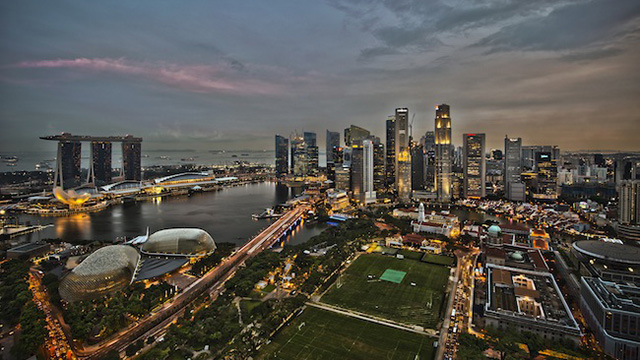
Ong Hui Juan spent nearly four years working in a British bank in Singapore, but decided to leave last year to pursue her passion of working with youth - an unusual and surprising decision in the achievement-oriented city state.
But Ong, 25, is just one of a growing number of young Singaporeans who are turning their backs on the material joys of the long-cherished "Singapore Dream," summed up as the "Five C's" - cash, car, credit card, condominium and country club membership - to do what they enjoy, even at much lower pay.
"I wanted to get out of a nine-to-five job. It was waiting for bonus after bonus, promotion after promotion. That didn't really appeal to me," said Ong, who studied banking and finance at university, but had worked with young people on the side.
"I don't need to be very rich as long as I have enough to get by for myself and my family, and I continue to have the flexible time I have now."
Young people may want to slow down, but the government does not. Singapore has long counted on its people as its biggest resource, the one that helped drive its transformation from a sea port with few natural resources into a key financial centre after independence in 1965.
The government has also placed a strong emphasis on practical skills such as science and mathematics in schools, with Singapore students usually excelling in international tests.
It is just one part of what has made Singapore one of the world's richest countries, with gross domestic product per capita of S$63,050 ($50,123) in 2011, 48 times the level in 1960, according to government statistics.
Not one to rest on its laurels, though, the Singapore government recently released a nearly 80-page "white paper" calling for higher productivity in its workforce and projecting population growth by as much as 30 percent by 2030.
But far from going along, some young Singaporeans feel a sense of disconnect from the traditional paths that are laid out ahead of them as part of this striving - get into a top school, land a high-paying job and hope that their children can build on their achievements.
"The institutional set up of Singapore makes it remain a more materialistic society, when the government always puts economic growth, and therefore materialistic achievement, as a first priority," said Chung Wai Keung, assistant professor of sociology at Singapore Management University.
"When the foundation of Singapore society is getting more secure, the younger generation can afford to make decisions different from the mainstream."
There are signs that more are already doing so, in part because financial firms have been shedding jobs the past few years, said Andrea Ross, Managing Director - Singapore, Vietnam and Malaysia, at recruiting consultancy Robert Walters.
"Redundancies across the board are still continuing within financial services globally, and Singapore youngsters are becoming more confident to take up jobs in industries they have a strong personal desire to be part of," she added.
The School of the Arts in Singapore, opened in 2008, has had around 1,000 applicants for only 200 spaces each of the last three years.
MORE FREEDOM
MaryAnn Loo, an artist in her late 20s, said younger people may have greater freedom to pursue their interests as they have been raised in relatively more comfortable conditions than their parents or grandparents.
Loo herself became a full-time artist at the end of last year and is staging her first solo exhibition. She previously studied psychology in university and had worked as a retail assistant and a freelancer on film and TV sets.
"Our parents grew up in a difficult time, and their primary purpose was survival. But I think a lot of people have already gone past the survival stage in Singapore, and therefore they can explore more things," Loo said.
This kind of maverick may still remain in the minority for a while at least, said Tan Ern Ser, an associate professor of sociology at the National University of Singapore.
"Some may well be able to afford 'dropping out' if they have the means, through inheritance, past savings, or having a rich spouse. But for most people, dropping out is not an option, at least not a long-term one," Tan said.
Yet Chung said these young people may ultimately prove to be pioneers.
"When there are more and more young adults making alternative decisions, and when more and more of them feel satisfaction because of their choice, it could reach a tipping point where the next generation will see those alternative options as legitimate," he added.-ABS-CBN News (February 18, 2013 3:58PM)
Former Senate President Ernesto Maceda on Sunday urged the Philippine government to resume active pursuit of the Philippines' claim to Sabah, as the standoff between Malaysian forces and an armed group of followers of the Sultan of Sulu continued in the resource-rich territory.
Maceda, a former ambassador to the United States who once chaired the Senate foreign relations `committee, said in a statement the Sabah issue "has been neglected and sleeping for a long time. It’s time to act to regain what is rightfully ours."
Malacanang Palace, however, remained non-committal as of Sunday on the matter of the government boosting the clamor of the Sultanate of Sulu to revive the Sabah claim, saying no comments are forthcoming until the Department of Foreign Affairs (DFA) has fully briefed the Executive.
Maceda said in his statement, “The people of the Sultanate of Sulu have a legitimate claim to Sabah considering that the British and Malaysian governments used to pay rentals for Sabah to the Sultan of Sulu.” According to one of the heirs of the sultanate interviewed by InterAksyon.com earlier, the check payments to cover rentals had not stopped.
According to Maceda, “renewed government efforts is the only way to stop the followers of the Sultan of Sulu from taking up arms and invading Sabah to press their claim."
Palace keeps discreet distance
Malacanang Palace, however, kept a discreet distance from the issue on Sunday.
Responding to journalists’ questions on whether the Palace planned to field an emissary to one of the heirs, Sultan Jamalul Kiram III, to ask him to recall his followers from Sabah; and whether Manila will actively seek talks to revive the Sabah claim, Deputy Palace Spokesperson Abigail Valte said on state-run Radyo ng Bayan, “At this point, [we won’t comment yet].
We’d like to defer comment on that and the DFA will be the one who will give us updates on the situation in Sabah if and when they deem it to be necessary.”
The Malaysian authorities have reacted to the presence of the large group of “intruders” by deploying hundreds of troops on sea and land patrols, but assured Manila that the matter will be resolved peacefully.
At the weekend, the Philippine government said ensuring the safety of Filipinos on the island is its main concern, and appealed for a peaceful resolution of the matter.
But certain political leaders, notably another ex-Senate president, Aquilino Pimentel Jr. and Maceda, have indicated that the standoff just won’t go away unless the root issue---the Sabah claim that has found no closure over nearly half a century---is addressed decisively. Pimentel, whose policy studies center at the University of Makati sponsored a forum in late 2011 on the Sabah claim, told InterAksyon.com earlier the Philippine government must ensure “our Muslim brothers and sisters” get their due---a remark seen as frowning on simply conceding the matter.
The Sunday statement from Maceda, who is seeking a Senate seat anew under the United Nationalist Alliance (UNA), noted that the Sultanate of Sulu ceded to the Philippine government its title and sovereignty to then President Diosdado Macapagal in 1962. "The Philippine government should now seriously consider bringing its claim to the United Nations," Maceda said.-Interaksyon (February 17, 2013 2:44PM)
Singapore - Singapore's founding father Lee Kuan Yew has been discharged from hospital after being confined due to an irregular heartbeat, the government said Sunday.
A statement from the office of his son, Prime Minister Lee Hsien Loong, said the 89-year-old former leader was resting at home.
"The doctors are following up with him to optimise his anti-coagulation therapy, in order to minimise the risk of further transient ischaemic attacks," it said.
A transient ischaemic attack occurs when blood flow to a part of the brain stops briefly and a person who suffers from this will display stroke-like symptoms which could clear in a day, according to an earlier statement.
The elder Lee was confined at the Singapore General Hospital on Friday. The latest statement did not say when he was discharged.
Lee Kuan Yew, who retired from the cabinet in 2011 but remains a member of parliament, is widely credited with transforming Singapore from an economic backwater to one of Asia's fastest-growing economies.
He served as prime minister from 1959, when Singapore gained self-rule from colonial ruler Britain, until he stepped down in 1990 in favour of his deputy Goh Chok Tong, who in turn handed power to Lee's son in 2004.
In November 2011, his physician daughter Lee Wei Ling revealed that the former prime minister was suffering from a neurological disease that makes it difficult for him to walk steadily.
Lee, a longtime fitness buff, has visibly slowed since his wife of 63 years Kwa Geok Choo died in 2010. -Rappler (February 17, 2013 5:52PM)
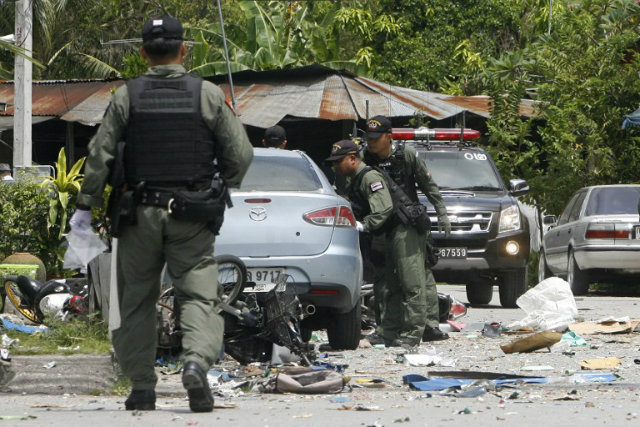
A series of blasts shook a town in the restive Thai south leaving three dead and 17 wounded, officials said Sunday, February 17, days after a major attack on a military base in the unrest-hit region.
Three bombs have exploded in the provincial town of Pattani since late Saturday, February 16, while police said four more devices had been defused, in the latest attacks to rock the Thai south, where thousands have died in a nine-year insurgency.
The National Security Council, said the incident was linked to Wednesday's failed assault on a military base in neighbouring Narathiwat province that left 16 militants dead -- one of the bloodiest incidents in the conflict.
"The militants want to show their power," NSC secretary general Paradorn Pattanathabutr told AFP.
A blast at around noon on Sunday in the centre of Pattani town killed a local security volunteer instantly, police said. Hospital staff said two defence volunteers later died of their wounds, while around 17 people, including civilians, were injured.
The attacks began with two fire bombs on Saturday night which damaged local shops.
Thailand's southernmost provinces near the Malaysian border suffer almost daily gun and bomb attacks by shadowy insurgents fighting for greater autonomy.
More than 5,500 people, both Buddhist and Muslim, have been killed in the bloody conflict since early 2004.
Members of Thailand's security forces and civilians accused of collaboration with the authorities are frequently targeted with ambushes and roadside bombs.
Wednesday's attack saw the military repel an assault by scores of heavily-armed gunmen who stormed the Narathiwat army base.
The NSC's Paradorn said suspected insurgents could go on to attack a third province in the violence-plagued region.
"They have to change their targets because of heightened security in the areas targeted earlier... Once they stop actions in Pattani, we have to be concerned about Yala. But there is tight security in all areas," he said.-Rappler (February 17, 2013 7:55PM)
At least 13 people were killed over the weekend in Indonesia after heavy rains triggered floods and landslides, officials said Sunday, February 17.
Flooding and landslides hit North Sulawesi province's capital city Manado early Sunday, killing 10 people and prompting another 1,200 to be evacuated, national disaster management agency spokesman Sutopo Purwo Nugroho said.
On Saturday, February 16, three people including two 14-year-old boys were killed after they were swept away by floodwaters in Jambi province on Sumatra island, local disaster official Dalmanto told AFP.
"Several days of heavy rains caused a river to break its banks and flood smaller waterways. The boys were taken away by strong currents as they were bathing in a waterway," he said.
"And today, we found the body of a man who went fishing in a canal."
Indonesia has been repeatedly afflicted by deadly floods and landslides in recent years during its wet season which lasts around half the year.
Environmentalists blame logging and a failure to reforest denuded land in the world's fourth-most populous country for the frequent flooding.
Heavy rains caused flooding in the capital Jakarta in January that left 32 people dead and at its peak forced nearly 46,000 to flee their homes.-Rappler (February 17, 2013 7:14PM)
Singapore's biggest protest in decades shows that the ruling party for over half a century is facing a more vocal electorate and must change or watch its popularity slide further, analysts say.
At least 2,000 Singaporeans chanted "we want change" and endured heavy downpours on Saturday, February 16, to reject government immigration proposals, in a rare demonstration in the tightly controlled city-state of 5.3 million people.
Although low by global standards the turnout was the largest in some years in Singapore, where the People's Action Party (PAP) has traditionally responded to any dissent with a firm hand, and provides the government with much to consider.
"I think that gradually the anti-PAP sentiment will build and spread unless there's a very fundamental change in the way the PAP deals with the people, which I don't see happening," political analyst Seah Chiang Nee told AFP.
"I think there's going to be a further decline in the popularity of the PAP between now and 2016," added Seah, who runs the political website www.littlespeck.com, referring to the next general elections.
For most people at the rally, held at a designated free-speech corner after a Facebook campaign, it was their first time waving placards and chanting slogans against the PAP, which has ruled Singapore for almost 54 years.
Eugene Tan, an assistant law professor at the Singapore Management University, said the high turnout showed "we now have a more contested political landscape and the PAP will have to deal with a more vocal electorate".
The PAP, long used to winning districts uncontested, has seen its support slide since a general election in May 2011 when it recorded is lowest ever share of the vote at 60 percent and the opposition won an unprecedented six parliamentary seats.
Since then, the PAP has lost two by-elections, although it still controls 80 of the 87 seats in parliament.
"PAP leaders seem to have lost their feel of the ground. Their technocratic decision-making style is no longer accepted, yet they persist in 'we know best' policies," said Reuben Wong, associate professor of political science at the National University of Singapore.
Saturday's protesters were rallying against government projections that the population could rise by a third to almost seven million in less than 20 years, with much of the increase resulting from immigration.
For years, the affluent but worker-starved city-state, built by mainly Chinese immigrants, had rolled out the welcome mat for foreigners, whose numbers rose drastically during the economic boom from 2004-2007.
Businesses hired construction workers from Bangladesh, hotel staff from the Philippines, waitresses from China, shipyard welders from Myanmar, technology professionals from India and bankers from the west.
Foreigners currently make up 38 percent of the population and the low Singapore birth rate means immigrants and guest workers will need to fill the manpower gap, raising that figure to 45 percent.
However, anger over the projections is causing Singaporeans to engage in something new -- speaking out against the PAP in public and not just in social media
"I'm thinking about my children, who are going to have a big problem studying in a competitive society next time," tax consultant Kevin Foo, 42, told AFP at the rally.
"Foreigners are going to create a lot of problems here, especially the rich ones who buy up all our property. Where are Singaporeans going to live?"-Rappler (February 17, 2013 3:02PM)
A group of visiting European Union lawmakers on Friday said China should join the arbitration process initiated by the Philippines before the United Nations to resolve the two Asian nations’ territorial rifts in the South China Sea and prevent a military conflict.
Although the E.U. says it does not take sides on the sea row involving the Philippines, China, Vietnam, Malaysia, Brunei and Taiwan, the European parliamentarians said they believe the Philippines’ legal action is a “good move” to enable a peaceful solution to the conflicts.
“The E.U. is on the side of the Philippines,” delegation chairman Werner Langen told a press conference.
“It is in the interest of all the EU states that through the adherence to international agreements we solve these questions and solve the question of natural resources.”
The E.U. lawmakers’ backing adds a crucial voice to the Philippine decision to initiate arbitration process under the United Nations Convention on the Law of the Sea (UNCLOS) to try to declare as “illegal” China’s expansive claim to the South China Sea, part of which is known in the Philippines as West Philippine Sea.
China has until February 21 to officially declare if it would get involved in the landmark case.
“The way chosen by the administration through arbitration is the way to do it,” Langen said.
”We hope China will accept this because it takes two to tango, to come to a solution.”
The lawmakers said they find unsettling and a “threat to international trade” what they call China’s “expansionist policy” in the region, including in the South China Sea, amid its rapid military build-up.
“We need here direct talks and also international talks in order to find a solution. Otherwise you will see an arms race going on in this part of the world and this is never good for humanity,” said delegation vice-chairman Robert Goebbels.
The delegation, headed by Langen, is on a five-day visit to the Philippines to see first-hand the economic and social developments in the country.
They held a series of meetings with their Philippine counterparts in Congress and various government officials, including Foreign Secretary Albert del Rosario.
Four members of Association of South East Asian Nations – Philippines, Vietnam, Brunei and Malaysia - have claims in the resource-rich waters. As a bloc, it has wanted to deal with the disputes as a regional group, a stance opposed by China, which wants bilateral negotiations to solve the overlapping claims without any international interference, specifically from its regarded regional military rival, the United States.
Manila has maintained that a rules-based approach is the only legitimate way in addressing disputes through a legal framework such as the UNCLOS.
UNCLOS is a 1982 accord by 163 countries that aims to govern the use of offshore areas and sets territorial limits of coastal states. The Philippines and China are both signatories to the treaty.
China is citing historical entitlements as basis for its huge claims over the South China Sea, a strategic waterway dotted with islands, shoals, cays, reefs and rock formations and is believed to be rich in oil and natural gas.
Many have feared the conflicts could be Asia's next flashpoint.
“The E.U. is very sympathetic to the Philippine claims and we see the way chosen by the administration to try to have this arbitration is a good one because that will force the Chinese to eventually accept arbitration,” Goebbels said.- Interaksyon (February 16, 2013 6:55PM)
The Philippines on Saturday called for a peaceful resolution to a tense stand-off between Malaysian forces and a group of gunmen claiming to be followers of the heir of a former Borneo sultan.
The group, estimated at 200 with dozens believed to be armed, landed by boat near the Borneo town of Lahad Datu in Malaysia's Sabah state from the neighbouring Philippines on Tuesday.
Police say the group has declared itself followers of a former Philippine-based Islamic sultanate that once controlled parts of Borneo, including the standoff site, and is refusing to leave Malaysian territory.
Philippine President Benigno Aquino's spokeswoman Abigail Valte said Saturday the safety of the Filipinos was the government's main concern as Malaysian armed forces and police have locked down the area.
"The primary concern now is their safety and to resolve the incident peacefully," Valte said in a radio interview in Manila.
She said the Philippines had received assurance from Malaysia that the government would encourage the group, which Manila has yet to identify, to leave the area peacefully.
Sabah police chief Hamza Taib was quoted by local dailies as saying police were in negotiations with the group and expected the stand-off to be resolved "very soon with the group returning to their home country".
Malaysian police have set up a series of road blocks along the route leading from Lahad Datu through palm oil plantations to the remote village where the gunmen are. Marine police were also patrolling the sea.
An AFP photographer was denied access some 20 kilometres (12 miles) from the stand-off site.
The group involved in the impasse has claimed to be adherents of the former Sulu sultanate, a regional power centre until its demise a century ago.
A Philippine military official, who spoke on condition of anonymity, told AFP Friday the group was demanding an increase in the nominal amount Malaysia pays, under a long-standing agreement, to the heirs of the sultanate for possession of Sabah.
Sabah has a history of incursions by armed Philippine groups, and the prickly situation could test ties between the neighbours, who are fellow members of the Association of Southeast Asian Nations (ASEAN).
In the worst incident, guerrillas of the Islamic militant Abu Sayyaf movement seized 21 mostly Western tourists at the Sabah scuba diving resort of Sipadan in 2000. They were taken to Philippine islands and later ransomed.-Yahoo Philippines (February 16, 2013 5:00PM)
Malaysian security forces have surrounded about 100 armed men believed to be from a breakaway rebel faction in the southern Philippines, Malaysian police and a government official said on Thursday, but a Philippine official said they were unarmed Filipinos who had been promised land.
The standoff in Malaysia's eastern Sabah state on Borneo island threatened to stir tension between the Southeast Asian neighbors whose ties have been periodically frayed by security and migration problems caused by a porous sea border.
"Our firepower is more than enough to arrest them but the government has chosen to negotiate with them so they leave peacefully to return to the south of the Philippines," Malaysian Prime Minister Najib Razak, on a visit to Sabah ahead of national elections, was quoted as saying by state-run Bernama news agency.
Malaysian police said in a statement the situation was under control, but did not say whether the men had agreed with a request to surrender.
A high-ranking Malaysian government source with direct knowledge of the situation told Reuters the gunmen were suspected to be from a faction unhappy with the Philippines' recent peace deal with the main Muslim rebel group.
Raul Hernandez, a spokesman for the Philippine Foreign Ministry, said his government was trying to get information about the incident and was in touch with Malaysian officials.
A senior Philippine military official said navy boats and an aircraft had been sent to the border area. He dismissed the Malaysian account of the group, saying they were unarmed Filipinos who had been promised land in Sabah.
He said a meeting over the land claim had attracted a large crowd and drawn the attention of Malaysian authorities.
"We know that these people arrived there five days ago and most of them are from nearby islands," said the official, who asked not to be identified.
"Some of them were already residents in Sabah for a long time and they normally cross the border without any problem."
Another Philippine military officer said the men were followers of the heirs of the Sultan of Sulu - an island group off the southern Philippines - who had been invited to Sabah by a Malaysian opposition politician to discuss land issues.
Malaysia pays a token amount to the Sultanate each year for the "rental" of Sabah state - an arrangement that stretches back to British colonial times.
The number of illegal Muslim immigrants from the impoverished southern Philippines has surged in recent decades, stirring social tension with indigenous Christian inhabitants in Sabah.
The Philippine government signed a landmark peace deal with Muslim rebels late last year to end a 40-year conflict in the south, but some factions have voiced opposition.
In 2000, a group of militants from the southern Philippines kidnapped 21 tourists from the Sabah diving resort of Sipadan. In 1985, 11 people were killed when gunmen believed to be from the southern Philippines entered Lahad Datu in Sabah, shooting at random before robbing a bank.-Reuters (February 14, 2013 4:00PM)
Paris and Rome may be famous for romance, but it’s Filipinos who get the most love. That, at least, is a conclusion that can be drawn from a global love survey conducted by the Gallup Organization.
In our latest column for Bloomberg View, we mine the unique Gallup data for insights into the nature of love and its relationship to nationality, age, money and economic development. The survey, conducted in 136 countries, posed the question: “Did you experience love for a lot of the day yesterday?”
In honor of Valentine’s Day, we thought readers might be interested in seeing the full ranking. So here goes. The first number after each country name is the percentage of respondents who said they had experienced love the previous day. The second (in parentheses) is the sample size for the country.
1. Philippines 93% (2193)
2. Rwanda 92% (1495)
3. Puerto Rico 90% (495)
4. Hungary 89% (1002)
5. Cyprus 88% (988)
6. Trinidad and Tobago 88% (506)
7. Paraguay 87% (1986)
8. Lebanon 86% (970)
9. Costa Rica 85% (1985)
10. Cambodia 85% (1961)
CONTINUE HERE: Bloomber (February 14, 2013)
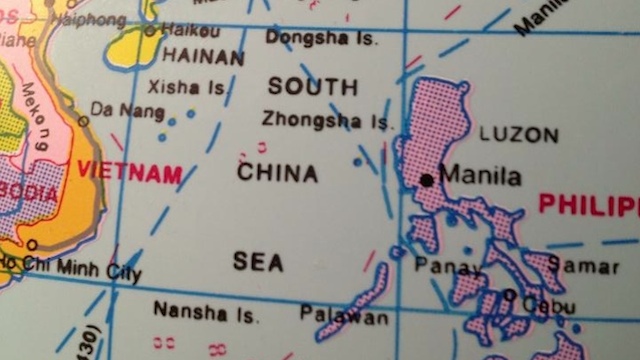
The Philippines' largest bookstore chain has withdrawn Chinese-made globes showing Beijing's claims to most of the South China Sea from its shelves, a government spokesman said Thursday, February 14.
The globes were sold by the National Bookstore up until Wednesday, foreign office spokesman Raul Hernandez said in a statement.
"The National Bookstore has withdrawn all the educational globes, which reflect China's nine-dash line encompassing the South China Sea, from its stores," Hernandez said.
"It has taken a patriotic position to proactively support the Philippine government in advancing Philippine foreign policy objectives."
He said the decision to pull out the globes came after a dialogue with the bookstore management, which claimed they were unaware of the "misinformation" contained in the education materials.
China's "9-dash line" outlines its claims to virtually all of the South China Sea, even waters close to the shores of its neighbours.
The Philippine government last month took China to an arbitration panel under the United Nations Convention on the Law of the Sea -- a 1982 treaty signed by both countries -- to demand that it declare China's claims invalid.
China's territorial claims overlap those of the Philippines as well as Brunei, Malaysia, Vietnam and Taiwan.
The Philippines and Vietnam have over the past two years complained of China's increasing assertiveness in enforcing its claims, particularly around areas believed rich in oil and natural gas reserves.
China's stance led to a standoff last year with the Philippines over rich fishing grounds around Scarborough Shoal, a rocky outcrop much closer to the Philippine coast than to China's shores.-Rappler (February 14, 2013 6:55PM)
The ongoing tensions between the China and the Philippines in the disputed Scarborough Shoal overtakes the reality of China’s ascendancies on the global stage lies the future of all nations. The thing is the history tells what the current situation is fraught with danger.
For over a century now China will overtake the U.S. as the largest economy in the world within the next decade. No doubt that the development of China will takes place the global economic power. According to Martin Jacques, Britain’s foremost public intellectuals who wrote the 2nd edition of his book entitled “When China Rules the World: The End of the Western World and the Birth of a New Global Order”, the Chinese economy will be almost the same size as the US economy by 2025, with the Indian economy the fourth largest after Japan. By 2050, they project that the largest economy in the world will be China, which will be almost twice the size of the US economy, with the Indian economy following a close third, almost on a far with the US. READ MORE: Agora Business Intelligence (February 14, 2013)