Tuesday, March 19, 2013

Philippines still undecided on Sabah claim


MalacaƱang said there is no decision yet on whether to pursue the country's claim to Sabah which is still being studied by a study group tasked by the President.

Presidential Spokesman Edwin Lacierda said the government may be hiring private lawyers to represent the government only after a decision is made to pursue the claim.

"According to Secretary [Rene] Almendras, if we're going to elevate this before international courts then, necessarily-if necessary, we have to retain private lawyers for this. But, as of now, let me be clear: There are no private lawyers retained for the Sabah claim," Lacierda said.

Lacierda also said he believes the ongoing peace talks with the Moro Islamic Liberation Front will not be affected by the recent conflict in Sabah involving the followers of sultan of Sulu.

He said there are only two annexes pending in the talks, adding that the sultanate was consulted alongside with the talks. Malaysia is the talk's third party facilitator.

"We are very hopeful that it will be signed, it will be completed. But, as to the timetable, we will leave that with the respective panels," Lacierda said.

"The whole framework agreement together with the annexes has one purpose in mind: to bring about enduring peace in Mindanao. So this is much bigger than what we have-the current situation in Sabah right now."-ABS-CBN News (March 19, 2013)

Monday, March 18, 2013

China warning after US missile defence plans


China warned against the bolstering of military power and urged caution on Monday after the US announced it would increase its missile defences in response to threats from North Korea.

"All measures seeking to increase military capacities will only intensify antagonism and will not help to solve the problem," foreign ministry spokesman Hong Lei said when asked about the US plans announced on Friday.

"We hope that the relevant parties will... adopt a responsible attitude and deal with this issue in a cautious manner," he said, adding: "China has always sought to prevent missile proliferation."

His remarks came days after US Defence Secretary Chuck Hagel vowed to increase by almost half the number of interceptors stationed in Alaska, following Pyongyang's threat of a "pre-emptive" nuclear attack against its arch-foe.

He also confirmed plans to increase missile defence facilities in Japan.

China is North Korea's sole major ally and main trading partner. But it has repeatedly expressed opposition to Pyongyang's nuclear programme and has voted to support sanctions at the United Nations, while urging diplomatic solutions.

Analysts say China above all values political astability in North Korea, fearful of a potential influx of migrants and a united Korean peninsula with a US military presence which might follow the collapse of the Pyongyang regime.

North Korea threatened to unleash a second Korean War -- backed by nuclear weapons -- in response to UN sanctions imposed after it carried out its third atomic test in February and to joint South Korea-US military manoeuvres.

The North fired short-range missiles into the East Sea (Sea of Japan) on Friday, Yonhap news agency said, after leader Kim Jong-Un oversaw a live-fire drill near the disputed Yellow Sea border with the South.-Channel News Asia (March 18, 2013)

US promises S.Korea all military resources


US Deputy Defence Secretary Ashton Carter on Monday promised to provide South Korea with every military resource under the US nuclear umbrella at a time of heightened tensions with North Korea.

Carter was in Seoul on the second leg of a four-nation tour of US allies and partners in Asia including Japan, the Philippines and Indonesia.

"We remain steadfast to our commitment to extended deterrence offered by the US nuclear umbrella," Carter said after talks with South Korean Defence Minister Kim Kwan-Jin.

"We'll ensure all of our resources will be available to our alliance," he was quoted as saying by Yonhap news agency.

Carter's visit came just days after the United States announced it would bolster defences against a possible North Korean missile strike in response to Pyongyang's threat of a "pre-emptive" nuclear attack.

Defence Secretary Chuck Hagel said Friday that 14 more interceptors would be stationed in Alaska, increasing by almost half the 30 already deployed along the California and Alaska coastlines.

Hagel said the defence upgrade was designed to "stay ahead of the threat" from North Korea, which is still believed to be years from having a missile capable of carrying a nuclear warhead to the continental United States.

Military tensions on the Korean peninsula have escalated dramatically since the North conducted its third nuclear test last month.

Pyongyang responded to the subsequent UN sanctions with threats of "all-out war" backed by nuclear weapons.

Some lawmakers in Seoul have suggested it is time for South Korea to develop its own nuclear deterrent, rather than relying on the US umbrella.-Channel News Asia (March 18, 2013)

6 other nations to join Philippines-US joint exercise


Australia, Brunei, Japan, South Korea, Singapore and Thailand will take part in this year's Balikatan joint military exercise to be held in the Philippines next month, apart from the host and the United States, a Philippine military official said here Sunday.

They will participate in the Multinational Maritime Security Roundtable Discussion for the upcoming Balikatan Exercise 2013, which will run from April 5 to 17, said Arnulfo Marcelo Burgos, spokesman of the Armed Forces of the Philippines (AFP).

However, the six countries will not be taking part in the actual field training exercises which will be limited to Filipino and US forces alone, Burgos added.

"The roundtable discussion seeks to determine specific humanitarian assistance and disaster relief operations in high-traffic international waters, and build response confidence among multi-national partners," said Burgos.

"The event will be one of the highlights of this year's military exercise wherein more than 8,000 soldiers from the AFP and US military are set to participate," he said. 

Burgos said the annual Balikatan exercise seeks to "further promote and foster the existing friendship" between the two countries and "advance the security and stability of the region in the near future." -The Philippine Star (March 18, 2013)

Sunday, March 17, 2013

S Korea border island calm despite N Korea threat


Residents of a South Korean island closest to the tense sea border with North Korea have shrugged off a warning from Pyongyang urging them to flee ahead of "thunderous attacks", an official said on Sunday. 

The North's official website, Uriminzokkiri, told residents of five islands south of the border to leave, warning of "devastating consequences" if recent cross-border tension escalates into a full-scale conflict. 

"The wisest choice when the fire of thunder rains down on you is running afar," it said in an editorial published late Friday. 

It repeated criticism of an ongoing South Korea-US joint military drill, calling it a rehearsal for war that may prompt counter-attacks from the North. 

"At a time like this... it will be the best for the residents at the five border islands like Baengnyeong and Yeonpyeong, the biggest flashpoint area between two Koreas... to evacuate as soon as possible," it said. 

A North Korean artillery attack on Yeonpyeong island, in the Yellow Sea, in 2010 killed four South Koreans. 

Young North Korean leader Kim Jong-Un recently threatened to "wipe out" the neighbouring island of Baengnyeong. 

The latest threat however had caused little panic among the 5,000 residents of Baengnyeong, the closest island to the border, said an administrative official on the island. 

"There's no visible sign of panic or mass exodus... people appeared to be accustomed to it to some degree," the official, who declined to be named, told AFP by telephone. 

"They are less worried about the situation than people outside believe," she said, adding the authorities however had stocked up underground shelters and been holding daily drills to prepare in the event of a bombardment. 

The disputed maritime border in the Yellow Sea has seen bloody naval clashes in the past and, with military tensions at their highest levels for years, is seen as the prime location for another confrontation.-Channel News Asia (March 17, 2013)

Saturday, March 16, 2013

North Korea tells South to leave islands


South Korean marines patrol on Yeonpyeong island, March 10
A North Korean propaganda website has warned of strikes against Southern islands and advised residents to leave.

The Uriminzokkiri website, linked to the regime, mentioned targets including Yeonpyeong island, which was attacked by Northern forces in 2010.

Pyongyang has made a series of threats since its last nuclear test in February prompted the UN to tighten sanctions.

The US said on Friday it would refocus missile defences to its west coast to counter the North's threats.

Defence Secretary Chuck Hagel said 14 more batteries would be placed in Alaska by 2017, adding to 30 already in place along the coast.

'War games'
On 12 February the North tested a nuclear device, which is believed to be its third such test.

The UN Security Council condemned the move and tightened sanctions on the regime.

Before and after the UN announcement, Pyongyang promised reprisals for the sanctions, including a threat to launch a pre-emptive nuclear strike against the US.

North Korean media has also been vitriolic against the South.

The Uriminzokkiri website stated: "Even an accidental spark by the belligerents in their war games can grow into a fire.

"And the damage for those living along the border and on the five western islands will be great."

The threats came shortly after South Korean Prime Minister Chung Hong-won visited Yeonpyeong.

The US and South Korea also began military drills earlier in the week.

South Korea's western islands are regarded as being particularly vulnerable to attack as they lie 10km (six miles) south of the sea boundary.

In 2010, the North bombarded Yeonpyeong with artillery shells, causing four deaths.

North Korea's foreign policy has for decades been dominated by threats of military strikes, and bartering over its nuclear programme.

Although Pyongyang has given up parts of its nuclear programme in return for aid, it has continued to develop missiles and enrich nuclear material.

The most advanced missiles have the capacity to reach Alaska.

It is not thought to have a missile capable of carrying a nuclear warhead.-British Broadcasting Network (March 16, 2013)

Thai navy denies shooting Rohingya refugees


The Thai navy has denied reports that its personnel opened fire on a group of Rohingya refugees, killing at least two.

Thai Navy commander Admiral Surasak Rounroengrom said that "no [Thai] navy officer could be that ruthless".

He was responding to reports that Thai sailors shot at a boat of around 20 Rohingya refugees off Thailand's south-western coast in February.

Thousands of Rohingyas are fleeing ethnic violence in western Burma.

Many of the boats, often bound for Malaysia, end up on Thailand's west coast.

Eyewitnesses told journalists and human rights groups that they saw several bodies in the water, and had sheltered some refugees who escaped after the incident.

"Navy personnel fired into the air three times and told us not to move," a refugee told Human Rights Watch (HRW). "But we were panicking and jumped off the boat, and then they opened fire at us in the water".

Adm Surasak said that navy officers had no reason to kill Rohingya refugees, because they were not an enemy.

"Since the policy is to push them back out to sea, we provide humanitarian aid with food and water, medicine and gas for them to continue their journey. All we do is help them, even fixing their boats [if necessary], before sending them back on their way," he said.

In the past, Thai authorities have been accused of dragging refugee boats that end up in Thai waters out to sea, leaving them to die. They have also been accused of selling on asylum seekers to human traffickers.

While the government has promised an investigation into the incident, Thai officials are rarely called to account over these kinds of allegations, the BBC's South East Asia correspondent Jonathan Head reports.-British Broadcasting Network

Indonesia carries out first execution since 2008


Indonesian police inspect marijuana plants in Aceh Besar district
The authorities in Indonesia have carried out their first execution for more than four years.

Officials confirmed that Adami Wilson, a Malawi national convicted of drugs smuggling, was executed by firing squad north of Jakarta on Thursday night.

The human-rights group Amnesty International called the execution a "shocking and regressive step".

Wilson was sentenced to death in 2004 after he was found guilty of smuggling 1kg (2.2lb) of heroin into the country.

His execution in the Pulau Seribu island chain is the first in Indonesia since 2008.

The attorney general's office told the AP news agency that nine other convicts were due to be executed this year.

Amnesty says that more than 140 people are on death row in Indonesia, mostly for drug crimes. About a third of them are foreigners.

"We oppose the death penalty in all circumstances, but Indonesia's long period without executions and the pledge to put even more people to death, makes this even more shocking," said Amnesty's Papang Hidayat.-British Broadcasting Corporation

‘Limited force’ could be used to rescue Filipinos in Sabah, says Santiago


The Philippines may use “limited force” against Malaysia if the  lives of Filipinos caught  in the middle  of a violent dispute in Sabah are in danger, Senator Miriam Defensor-Santiago said  on Friday.

While the use of law is prohibited under international law, Santiago said there are certain conditions that allow a state to use a “limited  force”   to protect and save the lives of its nationals.

“International law prohibits the use of force.  But there is an unwritten exception which allows states to protect or rescue their nationals by means of armed forces in the territory of another state,”  she said before the annual convention of the Association of Nursing Service Administrators Philippines held at the Manila Hotel.

“However, this exception should not be invoked, unless the Philippines has to carry out rescue operations,” said Santiago, a judge-elect at the International Criminal Court.

Santiago said among the pre-conditions that the  Philippine must first observe before  undertaking rescue operations in Malaysia are the following:

The lives of Filipino nationals should be genuinely in danger
Malaysia is unwilling or unable to ensure the safety of the persons concerned
The Philippines does not pursue any other purpose at the occasion of the operation
The scale and effects of the military force used are adequately measured to the purpose and conditions of the operation.

Asked  later during a press conference if the present  situation  in Sabah  warrants  the  Philippines’ use of  a limited force against  Malaysian authorities, Santiago said, “ According to the preconditions that are available, then the   Philippines could go to war in a limited sense as long as  these preconditions are met…”

“So as long as we meet these conditions under international law, we can avail of the exemption that allows us to use limited force to rescue Filipinos. We should have rescue operations there if the Filipinos are in danger of losing their lives,” she said.

Under international law, Santiago said, the  states in  conflict  with each other must avail  only peaceful means of settlements  of dispute.

“Meaning to say that war is considered illegal under international law for proving that a state has the right of sovereignty over a certain territory…That  of course applies to the dispute in Sabah by the Philippines and Malaysia,” she pointed out.

But the senator pointed out   how Malaysia stood  firm in sending first Filipinos out of Sabah before discussing any means  of settlement to end the dispute.

This attitude  by Malaysia, she said, was not approved by the international law.

“That’s is not provided for  by international law. If Malaysia insists that first Filipinos should all get out of Sabah then it will be willing to discuss any means of settlement of dispute, I’m afraid that Malaysia will be in danger   of being branded as a rouge state by the international community. That behavior is not anticipated and is not approved of by international law,” she said.

But  before  the  Philippines  takes  any action against  Malaysia, Santiago proposed the appointment of a third-party that would investigate  the recent spate of violence  in  Sabah.

When Congress opens in July, the senator said she would file a resolution expressing the sense of the Senate that President Benigno Aquino III should invite  Malaysia to agree  to an investigation by a third-party.

Santiago said the third-party could be a former prime minister or president of Southeast Asian Nations.-Philippine Daily Inquirer (March 16, 2013)

Philippines chosen as "most popular destination in Asia"


The Philippines was selected as the most popular destination by Guanzhou Information Times and the Guangzhou International Tourism Fair (GITF) during separate ceremonies held in the capital of Guangdong in southern China.

Li Xinzhang, vice president of Guangzhou Information Times, presented to the Philippines the “Most Popular Destination in Asia”. Philippine Tourism Undersecretary Daniel Corpuz and Consul General to Guangzhou Raly Tejada received the award.

Guangzhou Information Times is a subsidiary of Guangzhou Daily.

Meanwhile, the Philippines was also among the recipients of the “Most Popular Destination” awards during the Guangzhou International Travel Fair (GITF) Awards Night held at the China Marriott Hotel. 

The Philippines was the lone recipient from Southeast Asia. The other co-winners include Dubai (United Arab Emirates), Chicago (United States), Korea, Seychelles, Mauritius, Turkey, Sri Lanka, Macau, and Italy.

The GITF is organized by the Guangdong Provincial Tourism Administration through the Tourism Administration of Guangzhou Municipality in cooperation with Hannover Milano Fairs Shanghai Ltd..

Held every year in Guangzhou, Guangdong, China, the GITF has been recognized as one of the most significant annual international travel fairs in the Asia-Pacific Region for its extensive influence upon the tourism industry and related industries.

The Philippine Consulate General in Guangzhou issued a total of 59,861 visas to Southern Chinese visitors to the Philippines in 2012.

The Philippines continues to hold a strong appeal to the Chinese market as the Consulate General posted an increase of 6.45% in visa issuance for January 2013 over the same period last year.-ABS-CBN News (March 16, 2013 3:46PM)

Friday, March 15, 2013

Malaysia on guard against retaliatory attacks from Kiram forces


Malaysian security forces are on guard against what Malaysian Defense Minister Datuk Seri Dr Ahmad Zahid Hamidi described as possible retaliatory attacks by followers of Sulu Sultan Jamalul Kiram III.

According to a report by Malaysia's state-run Bernama news agency, Zahid said a "culture of seeking revenge" in parts of the southern Philippines may spark a repeat of the bloody clashes in Lahad Datu.

“I am putting my full confidence on our armed forces and police in ensuring the tragedy is not repeated despite fear that it may take place again,” he added.

For now, Zahid said, the Eastern Sabah Security Command (ESSCOM), which secures the 1,400-km coastline of East Sabah, is on guard to agaisnt the feared repeat attacks.

Meanwhile, Zahid was appreciative of Philippine efforts to work closely with Malaysia to resolve the issue, and prevent a repeat of the incident by blocking Kiram's followers from entering Malaysia.

However, he said that a joint Malaysia-Philippine operation in the southern Philippines to address the threat at its source was an impossibility.

“Firstly, if we were to enter the Philippines, we would not be respecting the sovereignty of the Philippines and vice versa in Malaysia. The sovereignty of both countries must be respected,” he said.

Furthermore, the Defense Minister does not see military action as a solution to the issue.

Malaysian security forces have so far killed 56 suspected Kiram followers. The clashes also killed ten Malaysia security members.

Also, 156 people have been detained for being in the red zone of offensive operations.

Also, some 97 were held for suspected links to Kiram's followers.-GMA News (March 14, 2013 11:51PM)

Asian Catholics celebrate election of Pope Francis

At the left Pope Benedict XVI,
Center, Pope Francis (the current Pope)
and at the left, the late Pope John Paul II

Catholics across the Asia-Pacific celebrated Thursday the election of the first non-European pope in 1,300 years, hailing Argentina's Jorge Mario Bergoglio as a champion of the developing world.

Any disappointment that Benedict XVI's successor was not Asian appeared to be largely offset by the new Pope Francis ending the European dominance, as well as his credentials as a humble man with a deep commitment to social reforms.

However, there was a word of admonishment from a group supporting victims of sexual abuse by Catholic priests in Australia.

Philippine President Benigno Aquino, who leads Asia's biggest Catholic country but who has challenged the Church over its opposition to contraception, offered warm praise for the 76-year-old new pontiff.

"The president, along with the Filipino people, joins all the Catholic faithful as they receive their new leader and meet his proclamation with a sense of boundless promise," said a statement released by Aquino's office.

Aquino said Francis raised hopes of "renewal" in the Catholic Church, citing his status as the first pope from outside Europe since Saint Gregory III, born in present-day Syria who was pope between 731 and 741.

The Philippine leader also pointed to Francis's status as the first Jesuit pope. The Society of Jesus is known for its emphasis on education and critical evaluation of Catholic doctrine.

Many people in the Philippines, which is home to about 80 million Catholics, had been hoping for Cardinal Luis Antonio Tagle from Manila to be elected in Wednesday's conclave at the Vatican.

But Father Emmanuel Alfonso, the head of the Jesuit Communications Foundation in Manila, said there was also relief that Filipinos had not "lost" their leader to the global role.

"Setting aside national pride, the Church here needs a pastor, the Church here also needs inspiration... to lose him right away would be a big loss," Alfonso said, pointing out Tagle was still relatively young at 55.

Alfonso said Catholics in Asia had little issue with the fact that the new pope resembled previous pontiffs from the Old World, in that he has Italian heritage and is getting on in age.

"He was born in Argentina, he grew up in Argentina, he studied in Argentina. I think the cardinals considered him Argentinian," Alfonso said, insisting his election marked a "radical" shift for the Church.

There were similar voices of support for Pope Francis in India, which is home to about 17 million Catholics, the Church's second-largest community in Asia after the Philippines.

Father Savio Barretto, rector at the Basilica of Bom Jesus in the holiday state of Goa, said he was "thrilled" to have a non-European pope and the first fellow Jesuit.

"I am proud to have a pope who is in our order. We are expecting a lot from him. We are also happy because he belongs to the Third World," he said.

One in four of Goa's 1.5 million population is Catholic -- a legacy of centuries under Portuguese rule.

Remedios Fernandes, a retired civil servant in Goa, was impressed with reports the new pope cooked his own food and traveled by bus as a cardinal.

"We are optimistic that his simplistic qualities will help the Church to get a closer and realistic look at social issues," he told AFP.

Indonesia's Catholic minority hailed Pope Francis as an ideal leader for members of the faith in developing countries.

"He is a breath of fresh air for the Catholic Church as he doesn't come from the Vatican, he's not from the Curia (Vatican government) and he always speaks up for justice," said Benny Susetyo from the Indonesian Bishops Conference.

Bishops across Australia also offered warm praise, although victims of sex abuse by Catholic priests urged Pope Francis to prove he could end the cover-ups and prevent further crimes.

Nicky Davis, from the Survivors Network for those Abused by Priests, called on Pope Francis to hand over secret Vatican files about child sex abuse in Australia, as a gesture to show he was serious about change.

"One of the first actions of the new pope should be to open all the secret Vatican files relating to child sexual abuse in Australia and hand them to Australia's royal commission," she said.

Prime Minister Julia Gillard announced last year a royal commission to investigate the issue.-ABS-CBN News (March 14, 2013)

Thailand asks Laos to repatriate straying elephants


Lao authorities reported yesterday that the Governor of Si Songkhram district in Nakhon Phanom, Thailand, had asked the Governor of Hinboun district in Khammuan province to ensure the quick round-up and return to Laos of wild elephants because they were worried the animals would cause extensive damage.

Department director Khamphay Phengphaengmeuang said the governors spoke to each other by phone about the elephants, which had crossed the Mekong River from Khammuan into Thailand.

“The governor of Si Songkhram district said he found one male elephant in Siowsongkham village but did not see any others. He is now asking Laos to expedite its return to Laos before it becomes a danger to local people,” Khamphay explained.

Officials in Houaykhiow and Donlab villages in Hinboun district said four wild elephants were seen near their villages on the night of March 10. Local residents and officials drove the animals away because they were worried about the damage they might cause to their crops and property. The elephants disappeared into the nearby jungle.

Later that night, at about 11:30pm, the elephants returned and once again officials and villagers drove them away but this time the elephants headed to the Mekong riverbank and crossed the river to the Thai side.

After this happened, the department arranged an urgent meeting with the Khammuan provincial governor yesterday and reported the matter.

Khamphay said all involved sectors in Vientiane are in official contact with the Thai government. The Department of Agriculture and district officials are cooperating with the Natural Resources and Environment Department to bring the elephants back to Laos.

“We have asked all parties involved to join with us on this. We believe there are at least three to five elephants because we have seen a group of five wild elephants in our province in the past, including two mothers and a large male,” he added.

He said this was the first time in five years that the wild elephants have entered villages to forage for food.

Khamphay said the five elephants came to Khammuan from the jungles of Borikhamxay province several years ago in their hunt for food.

The department responsible is now working hard to find the best way to bring the animals back to Laos as soon as possible under instructions from the government.-Asia News Network (March 13, 2013)

Philippines a good candidate for upgrade


The Philippines has pitched for an investment-grade status from Standard & Poor’s Ratings Services (S&P) whose diligence visit to the country early this week was described by officials as “very positive.”

“We are a good candidate for investment grade. I am quite optimistic we will get it,” Socioeconomic Planning Secretary Arsenio Balisacan told reporters yesterday.

S&P rates the Philippines one notch below investment grade at BB+ with a “positive” outlook. The forecast suggests an upgrade could come within the year.

The New York-based debt watcher is ahead among two other major credit raters, Moody’s Investors Service and Fitch Ratings, which despite rating the country one notch  below investment grade, both pegged their outlooks at “stable.”

Last month, Fitch also conducted its annual due diligence but the results are yet to be made public.

“I cannot share with you the exact details of the meeting but basically it was very positive,” Finance Undersecretary Jeremias Paul Jr. said in a phone interview.

National Treasurer Rosalia de Leon, in a separate phone interview, said the government shared its liability management strategies concentrated on lowering borrowing costs and lengthening debt maturities.

“They were very positive with what we presented,” De Leon said.

S&P officials, led by associate director Agost Benard, also asked for “clarifications” on the fiscal figures, she said without elaborating. Budget Secretary Florencio Abad, in a text message, said the agency is here to “conduct assessment” of the over-all economy.

On Tuesday, Finance Secretary Cesar Purisima reiterated the Philippines remains as one of “the most underrated” countries in the world, suggesting the market is already rating local bonds investment grade.

The Aquino administration has enjoyed 11 positive credit rating actions since it took over in July 2010 on the back of strong growth, low inflation, strong external payments position and improving state finances.-ABS-CBN News (March 14, 2013)

Wednesday, March 13, 2013

Japan seeks defense ties with ASEAN amid territorial rows with China


Japan on Wednesday called for stronger security ties with Southeast Asia as Tokyo looks to boost alliances at a time of growing territorial tensions with China.

Vice-minister level representatives from Japan and the 10-member Association of Southeast Asian Nations were beginning a two-day gathering at a Tokyo hotel, with several participating nations embroiled in sovereignty rows with Beijing.

"The Asia-Pacific region has various issues concerning security and defense ... including territorial conflicts in the South China Sea," Vice Defense Minister Akinori Eto told the opening session of the closed-door meeting.

"On top of the growing maturity of our economic cooperation, Japan and ASEAN need to further strengthen ties in the field of security and defense," Eto said.

The meeting is the first high-ranking defense dialogue of its kind since hawkish Prime Minister Shinzo Abe took office late December following a landslide victory in general elections.

"Our country changed governments late last year," Eto said. "Under the new regime, we want to reinforce cooperation in security and defense with ASEAN countries and contribute to peace in the region," he added.

Japan and several members of ASEAN have locked horns with China over separate territorial disputes.

Relations between Beijing and Tokyo have deteriorated badly over the last year as the two sides argued about the sovereignty of Tokyo-controlled islands in the East China Sea.

On Tuesday, three Chinese government ships spent several hours in the 12-nautical-mile territorial zone off one of the Senkaku islands, claimed by Beijing under the name Diaoyus. Taiwan also claims them.

ASEAN members Vietnam, the Philippines, Malaysia and Brunei, as well as China and Taiwan, have claims to parts of the South China Sea, which contains some of the world's most important shipping lanes and is believed to be rich in fossil fuels.

Simmering tensions over the issue have risen in the past two years, with the Philippines and Vietnam accusing China of becoming increasingly aggressive.

China claims most of the sea, including waters close to the shores of its neighbors.

Relations between the Philippines and China have become particularly tense since patrol vessels from both countries engaged in a standoff over the Scarborough Shoal in April.-Interaksyon (March 13, 2013)

North Korea places South Korean island in crosshairs


North Korea leader Kim Jong-Un threatened to "wipe out" a South Korean island as Pyongyang came under new economic and diplomatic fire Tuesday, March 12, from US sanctions and UN charges of gross rights abuses.

Military tensions on the Korean peninsula have risen to their highest level for years, with the communist state under the youthful Kim threatening nuclear war in response to UN sanctions imposed after its third atomic test last month.

It has also announced its unilateral shredding of the 60-year-old Korean War armistice and non-aggression pacts with Seoul in protest at a joint South Korean-US military exercise that began Monday.

While most of these statements have been dismissed as rhetorical bluster, the latest threat to the border island of Baengnyeong, which has around 5,000 civilian residents, appears credible and carries the weight of precedent.

In 2010, the South Korean naval vessel Cheonan was sunk in the area of Baengnyeong with the loss of 46 lives, and later that year North Korea shelled the nearby island of Yeonpyeong, killing four people.

On a visit Monday to frontline artillery units, Kim Jong-Un briefed officers on plans for turning Baengnyeong into "a sea of flames".

"Once an order is issued, you should break the waists of the crazy enemies, totally cut their windpipes and thus clearly show them what a real war is like," Kim was quoted as saying by the Korean Central News Agency.

Priority targets included radar posts, Harpoon anti-ship missile launchers, 130mm multiple rocket stations and 150mm self-propelled howitzer batteries, Kim said.

An administrative official on Baengnyeong, Kim Young-Gu, said civilian emergency shelters on the island had been fully stocked and all village councils put on high alert.

"It's not like there's a mass exodus of panicked islanders to the mainland. But to be honest with you, we're a bit scared," he told AFP by telephone.

The disputed sea border off the west coast was the scene of deadly naval clashes in 1999, 2002 and 2009.

Residents on a number of frontline islands have reportedly taken to sleeping in their clothes in preparation for a night-time alert.

The crisis represents an early test for South Korea's new President Park Geun-Hye, who was sworn in only two weeks ago, while analysts worry about just how far the inexperienced Kim Jong-Un is willing to go.

In Seoul, Defence Ministry spokesman Kim Min-Seok said the North Korean leader's frontline visits were aimed at exerting "psychological pressure" on South Korea.

Kim said the North had already begun a series of naval drills using submarines and was expected to launch full-scale military maneuvers in the coming days.

"If the North provokes us, we will respond in ways that will cause them more harm," he said.

In a move likely to provoke a fresh round of furious rhetoric from Pyongyang, the United States on Monday slapped sanctions on North Korea's primary foreign exchange bank and four senior officials.

The United States will "continue to work with allies and partners to tighten national and international sanctions to impede North Korea's nuclear and missile programs", US national security advisor Tom Donilon said in New York.

Past sanctions have failed to persuade Pyongyang to abandon its nuclear program, but the international community hopes measures targeting financial lifelines can slow down the process and curb proliferation.

The US measures come on top of financial sanctions imposed last week by the UN Security Council including China, North Korea's economic and diplomatic patron.

While Donilon labelled the recent threats emanating from Pyongyang as "hyperbolic", he stressed the United States would use the "full range of our capabilities" to protect the US and its allies such as South Korea.

Pyongyang also came under attack on another front at the UN Human Rights Council in Geneva, where the UN Special Rapporteur on human rights in North Korea laid out a litany of abuses and crimes against humanity.

Rights violations in North Korea "have reached a critical mass", Marzuki Darusman told the council, citing public food deprivation, torture and arbitrary detention.

He also highlighted concerns about a network of political prison camps believed to hold at least 200,000 people, including detainees who were born in captivity because entire families are thought to have been sent there.

He called for an international commission of inquiry into the human rights record of North Korea, which has repeatedly refused to cooperate with past UN investigators. - Rappler (March 13, 2013)

Thailand, Laos sign MOU on contract farming


Thailand and Laos yesterday signed a memorandum of understanding (MOU) on cooperation in the promotion of contract farming scheme to support production of farm products in the neighboring country.

Foreign Minister Surapong Tovichakchaikul inked the document with Laos's Minister of Industry and Commerce Nam Viyaketh in Vientiane on the sideline of 5th summit of the Ayeyawady-Chao Phraya-Mekong Economic Cooperation Strategy (ACMECS).

Prime Minister Yingluck Shinawatra and her Lao counterpart Thongsing Thammavong witnessed the signing ceremony.

The MOU is a part of cooperation on agriculture under the ACMECS scheme to accelerate and facilitate contract farming to guarantee food sufficiency in the region. Under the MOU, Thailand will import Lao farm products with tariff exemption under the Asean Trade in Goods Agreement.

List of products would be determined and announced later by concern authorities in Thailand. Contract farming is an agricultural scheme which buyer and farmers agree upon conditions on production and marketing. The contract farming is a Thai flagship project to promote supply of farm products in neighboring countries into the Thai economy. Thai private sector involved and invested under the contract farming in Laos for more than a decade.

To concern of the two countries, sometime Thai market could not absorb some particular farm items due to domestic over production, causing troubles for Lao producers.

The MOU would establish a working committee to regularly consult at least once a year on matters relating to annual operation plan and the review of the list of farm products under the scheme.

The MOU was not a dispute settlement mechanism but any disputes could be settled through consultations within the working committee,

According to the article 14. The ACMECS Business Council may participate in the coordination for the settlement of disputes.

The MOU would play a crucial role in facilitating agricultural activities in Laos. Both countries would lender assistance to companies in forming partnership with local partners.

Authorities of both sides would facilitate border crossing of staff members of agricultural companies to carry out contract farming activities. Import of seeds, seedlings, fertilizers, equipment and machinery for the purpose of contract farming would be granted privilege tax incentives.

The MOU remains valid for initially five years after the signing but can be renewed as agreed by both sides. It could be terminated by giving the other side six months prior notice.-The Nation (March 13, 2013)

China's military buildup worries Taiwan


China has continued to grow its military strength with part of that development concerning military units with a focus on Taiwan, according to a defense review released by Taiwan's Ministry of National Defense (MND) on Monday.

The Chinese People's Liberation Army (PLA) has continued to upgrade arms for troops stationed with Nanjing and Guangzhou military units, which have the potential to threaten Taiwan, a MND-released Quadrennial Defense Review (QDR) said. The report said this situation, which has emerged despite improving cross-strait ties, poses a major threat to Taiwan.

For the past few years, the PLA has been conducting military exercises which focus on the scenario of taking an island should possible military conflict occur, the QDR also said.

Meanwhile, the Chinese government continued to call on the United States to stop selling weapons to Taiwan in the hope of increasing the military gap between the two sides of the Taiwan Strait, it said.

The above evidence all shows that Beijing's growing military strength continues to target and threaten Taiwan, the QDR said.

This is the second version of the QDR released by the MND. Defense Minister Kao Hua-chu was scheduled to report to the legislatures' Foreign Affairs and National Defense Committee today.

On March 16, 2009, Taiwan issued its first QDR to the legislature for review as a result of an amendment to the National Defense Act. Regulation requires that the QDR be sent to the Legislative Yuan for review every four years.-Asia News Network (March 13, 2013)

Reforms in Myanmar gaining momentum


The reforms in Myanmar have started to gain momentum and observers say this is a sign of President Thein Sein's vision bearing fruit.

It is also an indication of the president's efficiency since he took office two year ago.

From the acceptance of public protests, release of political prisoners to revisions to a number of existing laws, President Thein Sein, a former general, has introduced sweeping changes in Myanmar since he assumed his new role in 2011,

Political analyst Toe Zaw Latt said: "I think there is a dramatic change and it is not only a change in the person but also a change in the players. In the past, it was a one man regime which is one senior general but now, the power is in three areas. One is the president, parliament and at the same time army. So this is the reality."

Many acknowledge that President Thein Sein has moved the country from being outright authoritarian towards the path of democracy.

"There has been significant changes or steps taken in different areas, political, economic, media. So transformation or reform process is taking its momentum. Many people believe in the president that he is doing a good job. One of the most important achievements he has made in this very short time is that he can convince the Myanmar public, to a large extent, as an ex-general, a large proportion of the public has gained more and more belief in him," said Sithu Koko, a journalist.

Political watcher Win Kyaw said: "The public believe Thein Sein as a person but he hasn't brought about any great achievement yet. However, we see and feel that he is really trying to bring about a change in the current situation."

However, some Myanmar nationals believe more should be done to further liberalise the nation.

To do that, the cabinet ministers, mainly former military men, must rid their old mindset of governing.

"They still hold the mindset that people should be kept quiet. Those ex-generals do not believe in being accountable to the people and they don't understand or feel that they have a need to teach the citizens about the concept of freedom. That's the main area which requires improvement," said Win Kyaw.

There is no denial that the political environment in Myanmar has changed since President Thein Sein assumed office in March 2011. The wheel of change is certainly in motion, prompting even some to wonder if the speed of change may be too fast for some to handle.

But many, including critics of the political landscape here believe that the development now will enable the country to hold a free and fair election come 2015.-Channel News Asia (March 13, 2013)

Tuesday, March 12, 2013

Vietnam to learn from Philippines' anti-graft fight


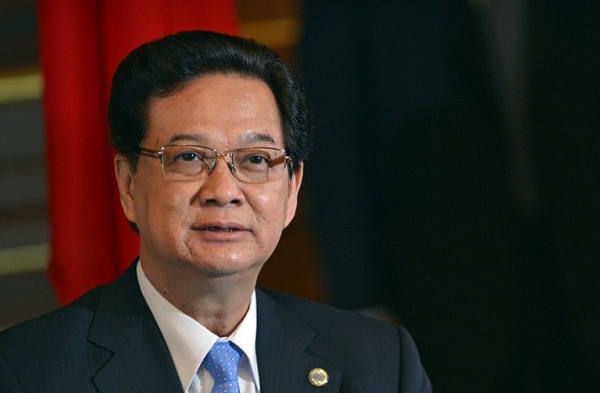
Vietnam Prime Minister Nguyen Tan Dung told Ombudsman Conchita Carpio Morales of the Philippines that Vietnam hopes to learn from the anti-corruption experiences of countries across the world, including their regional neighbours, during a meeting in Hanoi yesterday.

Dung emphasised that the Party and State of Vietnam pay much attention to the prevention and combat of corruption, a constant struggle that requires drastic and long-term measures to increase the transparency of government procedures and uphold the punishment of offences.

As a neighbour of the Philippines and fellow Asean member, Vietnam attaches a great deal of importance to nurturing their relationship to achieve mutual benefits for both countries, the PM added.

Applauding the cooperation between the two partners, Dung declared his support for the quick and effective implementation of agreements reached during Morales's visit.

Morales earlier briefed Dung on the results of her talks with her Vietnamese counterpart, Inspector General Huynh Phong Tranh. She described the newly-signed memorandum of understanding on collaboration in the area of transparent governance.

She added that her agency wants to further boost cooperation with the government Inspectorate of Vietnam so that the two parties can learn from each other in the fight against corruption.

Efficient management

The same day, Inspector General Tranh held extensive talks with the visiting Filipino guests.

He said he believed the delegation's visit to be a valuable opportunity for progress in the battle against corruption, and would subsequently lead to more efficient state management, increased accountability and greater transparency in the countries' inspection activities.

In reply, Ombudsperson Morales said corruption negatively impacts human beings and socio-economic development.

The newly signed memorandum of understanding is a chance for both inspection agencies in both nations to share their anti-corruption expertise. -Viet Nam News (March 12, 2013)